
Top 10 Radiation Therapist Interview Questions and Answers for 2026: Staff, Senior, and Lead Roles in Hospitals, Cancer Centers, and Oncology Clinics

Interviewing for a radiation therapist role is a strange balancing act. You have to prove you can operate complex equipment with precision, and in the same breath show you can sit with someone on the worst day of their life.
That dual demand trips up a lot of good candidates. People who crush the technical questions sometimes freeze on the human ones, and people who ooze compassion sometimes sound vague when a chief therapist asks about dose accuracy or ALARA.
This guide walks you through the ten questions you’re most likely to hear across hospitals, dedicated cancer centers, and outpatient oncology clinics, with sample answers that sound like a real person instead of a textbook. If you want to see how healthcare interviews work in neighboring specialties, our breakdowns of physical therapist interview questions and respiratory therapist interview questions cover similar ground. And for the hard numbers on pay and outlook, the BLS Occupational Outlook for Radiation Therapists is worth a bookmark.
☑️ Key Takeaways
- Name real equipment, not categories. Saying “radiation equipment” signals shallow experience. Saying “TrueBeam with ARIA” tells a panel you’ve actually been in the vault.
- Lead with ARRT and safety. Current ARRT certification in Radiation Therapy is table stakes in most states, and your ALARA philosophy comes up early and often.
- Compassion is scored, not assumed. Oncology hiring managers weigh how you comfort frightened and palliative patients nearly as heavily as your technical skill.
- Prep specific stories. Use the SOAR method for behavioral questions so your patient-safety, teamwork, and crisis examples land with a clear result instead of rambling.
What the Radiation Therapist Interview Process Actually Looks Like
Most radiation therapist interviews start with a recruiter or HR screen focused on the basics: your ARRT certification status, state licensure, and availability. Clear that, and you’ll usually move to one or more in-person or panel interviews with a department manager, the chief therapist, and sometimes a radiation oncologist.
Expect a blend of behavioral questions, role-specific technical questions about equipment and treatment protocols, and scenario-based questions that test your patient-safety judgment. Larger health systems often add a department tour or an informal meet-and-greet with the clinical team, so treat those casual moments as part of the evaluation. For a wider pool of practice prompts, the Indeed list of 41 radiation therapist questions pairs well with this guide.
The Top 10 Radiation Therapist Interview Questions
1. Tell me about yourself and why you chose to become a radiation therapist.
This isn’t an invitation to recite your resume. The interviewer wants to understand your motivation and whether you actually get what the job involves day to day, which is repetitive precision work alongside seriously ill patients.
The common mistake is going too personal too fast or too clinical too fast. Aim for a short arc: what drew you in, what keeps you here, and why this setting fits you now.
Sample Answer:
“I came into healthcare wanting direct patient contact, but I also love the technical side of medicine, and radiation therapy sits right in the middle of those two things. What hooked me during clinicals was seeing the same patients every day for weeks. You build real relationships over a treatment course, and you’re a steady presence during a terrifying time for them. On the technical end, I like that precision genuinely matters, millimeters and seconds count. After a few years in a hospital setting, I’m looking to grow in a higher-volume oncology center where I can work across more modalities, which is what drew me to this role specifically.”
2. How do you ensure patient safety during a radiation therapy treatment session?
Safety is the heartbeat of this job, so this question is almost guaranteed. Interviewers want to hear a repeatable process, not a vague promise that you’re careful.
Walk through your verification habits concretely: patient identification, chart and plan checks, imaging verification, and ALARA thinking. Specifics separate you from candidates who just say “I double-check everything.”
Sample Answer:
“I treat every session like a checklist I never skip, even on busy days. I verify patient identity with at least two identifiers, confirm the treatment site and plan against the chart in the record-and-verify system, and run image guidance to confirm positioning before beam-on. I’m constantly applying ALARA, so I’m minimizing beam-on time, confirming shielding where it’s used, and making sure no one unnecessary is in the room. If anything looks off, a shift in setup, a number that doesn’t match, a patient who’s lost weight, I stop and resolve it before I treat. I’d rather pause and recheck than assume.”
Interview Guys Tip: Have one real ALARA story ready to deploy here. Panels love it when you move from philosophy to a specific moment: a day you adjusted shielding, cut unnecessary beam-on time, or repositioned yourself and a colleague to protect everyone in the room. Concrete detail about distance, shielding, and dose is what makes a safety answer memorable instead of generic.
3. Can you describe your experience with radiation therapy equipment such as linear accelerators, IMRT, SBRT, and IGRT?
This is where experienced panelists quietly separate the hands-on candidates from the rest. A vague answer about “radiation equipment” is a red flag.
Name the actual systems and modalities you’ve run. If your experience is lighter in one area, be honest and frame it as something you’re eager to build on rather than overselling.
Sample Answer:
“Most of my experience is on Varian TrueBeam units running daily IMRT and VMAT cases, with ARIA as our record-and-verify system. I’ve done a lot of IGRT with cone-beam CT for daily positioning, and I’ve supported SBRT cases for lung and spine where setup tolerances are tight and immobilization is everything. I’ve also worked briefly on an Elekta platform during a cross-coverage stretch, so I’m comfortable adapting between systems. Where I want to grow is stereotactic radiosurgery, I’ve assisted on SRS but haven’t been primary, and I know that’s a strength of this department, so I’d value building that out here.”
Interview Guys Tip: Before the interview, research the facility’s exact modalities and patient volume, which most hospital and cancer center sites publish. Then turn it into a smart question: “I saw you recently added stereotactic radiosurgery, what does the SRS workflow look like here?” That one move shows you did homework and genuinely understand the work, and it consistently impresses panels.
4. How do you explain the radiation treatment process to patients so they understand what to expect?
Communication is a core competency here, not a soft bonus. Patients are scared, often overwhelmed, and sometimes hearing a treatment plan through heavy anxiety.
Show that you translate clinical language into plain terms and check for understanding. The best answers reveal empathy and a repeatable approach at the same time.
Sample Answer:
“I start by meeting them where they are, because a newly diagnosed patient and someone three weeks into treatment need very different conversations. On a first day I keep it plain: what the machine does, why they’ll hear it move and buzz, that the treatment itself is painless and quick, and that they need to hold still while we do the heavy lifting. I avoid jargon, I use comparisons like “this part is similar to getting an X-ray,” and I always pause to ask what questions they have rather than assuming they followed. I also tell them exactly what to expect next visit, because predictability lowers fear. Knowing what’s coming gives people back a little control.”
5. Describe a time when you had to handle a difficult or emotionally distressed patient. How did you manage it?
This is a behavioral question, so structure it with the SOAR method: situation, obstacle, action, result. Don’t announce those labels, just let them shape the story.
Oncology panels are listening for genuine emotional intelligence, not a hero narrative. Pick a real moment where your calm presence actually changed the outcome for the patient.
Sample Answer:
“I had a patient partway through a head and neck course who showed up one morning shaking and in tears, saying she couldn’t do the mask again. The immobilization mask had started triggering real panic, and we were already running behind, so there was pressure to keep the schedule moving. I pulled her out of the hallway into a quieter spot and just let her talk for a few minutes instead of rushing her onto the table. We agreed on a plan together: she’d keep her eyes closed, I’d narrate every step out loud, and I’d stay within her line of sight until the mask was locked. I also looped in the nurse about anxiety support going forward. She finished that session, and she completed her full course without missing another day. She told me later that being heard that morning was what got her through.”
Interview Guys Tip: Don’t make your toughest patient story about a clinical win. Make it about the human one. Candidates who only talk equipment lose out in oncology settings, so weave in how you actually comforted a frightened or palliative patient. For more on blending empathy with competence, our occupational therapy interview guide handles the same tension well.
6. What would you do if a senior therapist or supervisor set up a patient incorrectly, or you disagreed with their clinical judgment?
This is a safety-and-integrity test disguised as a hierarchy question. They want to know you’ll speak up to protect a patient without turning it into a confrontation.
The wrong answers are either “I’d defer because they’re senior” or “I’d overrule them.” The right answer shows respectful escalation and patient safety as the non-negotiable.
Sample Answer:
“Patient safety wins over hierarchy every time, but how I raise it matters. If I noticed a setup that looked wrong, I’d stop before beam-on and raise it directly but respectfully, something like, “Can we double-check this positioning against the plan? Something looks off to me.” Most of the time that’s a quick catch and we move on, no ego involved. If we still disagreed and I had a genuine safety concern, I wouldn’t treat until it was resolved, and I’d escalate to the chief therapist or the physicist rather than override anyone myself. I’ve been on the receiving end of a catch too, and I’m grateful when someone flags something I missed. That’s the culture that keeps patients safe.”
7. How do you ensure accuracy in patient positioning and delivery of the correct radiation dose?
This question digs into your quality-assurance discipline. The interviewer wants to see that accuracy is a system for you, not a hope.
Reference the actual checkpoints: immobilization devices, reference marks, image verification, chart checks, and dose record accuracy. Tie it back to the record-and-verify workflow.
Sample Answer:
“Accuracy comes from matching every session back to the plan and never trusting memory over the chart. I use the same immobilization devices and reference setup documented at simulation, align to tattoos or surface guidance, then confirm with daily imaging against the reference before I treat. The record-and-verify system is my backstop, so I’m confirming the plan, field, and monitor units match what’s prescribed, and I pay attention to chart checks and dose records staying current. If a patient’s anatomy has changed enough to affect the setup, I flag it for the physicist and physician rather than forcing the match. Consistency day to day is what protects the cumulative dose over a whole course.”
8. Describe a time you worked within a multidisciplinary team to deliver optimal patient care.
Radiation therapy never happens in a silo, so this behavioral question checks whether you collaborate smoothly with oncologists, physicists, dosimetrists, and nurses. Shape it with SOAR.
Choose an example where your communication actually moved a patient’s care forward, not just a time you were in the room while others decided things.
Sample Answer:
“We had a patient whose weight loss over treatment was changing his setup, and his daily images were starting to show the fit drifting. The challenge was that flagging it meant potentially pausing treatment and pulling several busy people together quickly. I documented what I was seeing across a few sessions and brought it to the physician and dosimetrist directly instead of just noting it and moving on. We decided he needed a re-sim and a replan, and I coordinated with the nurse on nutrition support and with scheduling so his treatment gap stayed minimal. He got an adaptive plan that fit his current anatomy, and his remaining course stayed on track. It worked because everyone trusted the therapist on the floor to raise the flag early.”
9. How do you stay current with new developments in radiation therapy technology and techniques?
This question measures professional initiative, which matters more as you move toward senior and lead roles. Passive answers like “I read when I can” fall flat.
Point to concrete habits: continuing education, advanced ARRT certifications, professional organizations, and on-the-job training when new systems arrive. If you’re pursuing a specialty, say so.
Sample Answer:
“I treat continuing education as part of the job, not an afterthought. I keep my ARRT requirements current through ASRT coursework, and I pick topics tied to where the field is heading, like adaptive planning and SBRT techniques. When our department commissioned new software, I volunteered for the early training group so I could help bring the rest of the team up to speed. I’m also working toward an advanced certification in CT, since image guidance keeps getting more central to what we do. Beyond formal stuff, I lean on our physicists and dosimetrists, they’re a great in-house resource, and I ask a lot of questions during plan reviews.”
10. Have you ever dealt with a crisis or emergency during a treatment session? How did you react?
This tests composure and protocol knowledge under pressure. Use SOAR, and make sure the “action” shows clear thinking, not panic.
Even if you haven’t faced a dramatic emergency, you can describe a medical event, equipment fault, or interlock situation and how you followed safety procedure.
Sample Answer:
“During a treatment, an older patient became unresponsive on the table partway through a field. The tricky part was that I was alone in the room controls at that moment and had to act fast without skipping safety steps. I immediately stopped the beam, confirmed it was off, and got into the room to check on her while calling for help through the intercom. She’d had a vasovagal episode, so I kept her still and supported while the nurse and a physician arrived, and we didn’t resume until she was fully assessed and cleared. She was fine and finished treatment later that day. The takeaway for me was that stopping beam-on first and staying calm is always the right opening move, everything else follows from that.”
Top 5 Insider Tips
- Drop real system names, not categories. Mentioning Varian TrueBeam, Elekta Versa HD, or ARIA and MOSAIQ record-and-verify systems tells experienced panelists you’ve actually logged hours in the vault. Vague “radiation equipment” phrasing reads as shallow experience.
- Bring a rehearsed ALARA scenario. Interviewers reliably probe your radiation safety philosophy, so have a real story ready with specifics about shielding, beam-on time, and distance. That detail is what separates a safety answer that lands from one that evaporates.
- Show compassion as a hard skill. Talk about how you actually comforted a frightened or palliative patient, not just that you “care.” Oncology hiring managers weight emotional intelligence nearly as heavily as technical competence, and the RoleCatcher skill-by-skill guide breaks down why.
- Name your certifications and CE proactively. If you hold or are pursuing advanced ARRT specialties like CT or dosimetry, or you’ve done ASRT continuing education, say so without being asked. It signals initiative and can tip you toward senior or lead roles. The MegaInterview question bank shows how often this comes up.
- Research the facility’s modalities first. Know their patient volume and technology before you walk in, then ask informed questions about workflow for SRS or SBRT cases. Pairing that prep with a sharp resume, our clinical resume template translates well here, makes you look like someone already thinking about the job.
Wrapping Up
The therapists who advance furthest can switch fluidly between the two halves of this job: the dosimetry, imaging verification, and chart-check precision on one side, and the frightened human on the table on the other. Prepare specific stories for both, and you’ll stand out in almost any oncology setting.
It’s also a stable, well-compensated field, with a median annual wage of $101,990 as of May 2024 per the BLS, even if projected growth of 2% through 2034 and roughly 900 openings a year across the 19,200 jobs nationwide mean competition is real. If you’re still mapping out your path, our roundups of the highest paying entry level jobs for 2026 and the best entry level jobs add useful context, and if you support a front-desk or intake team, the medical receptionist interview guide rounds out the clinical hiring picture.
This article is the general version. Longbow is the tool we built to do this for the specific job you're interviewing for: it reads the posting, predicts the questions, and coaches your answers from your real background. Here's the full story of why we built it.
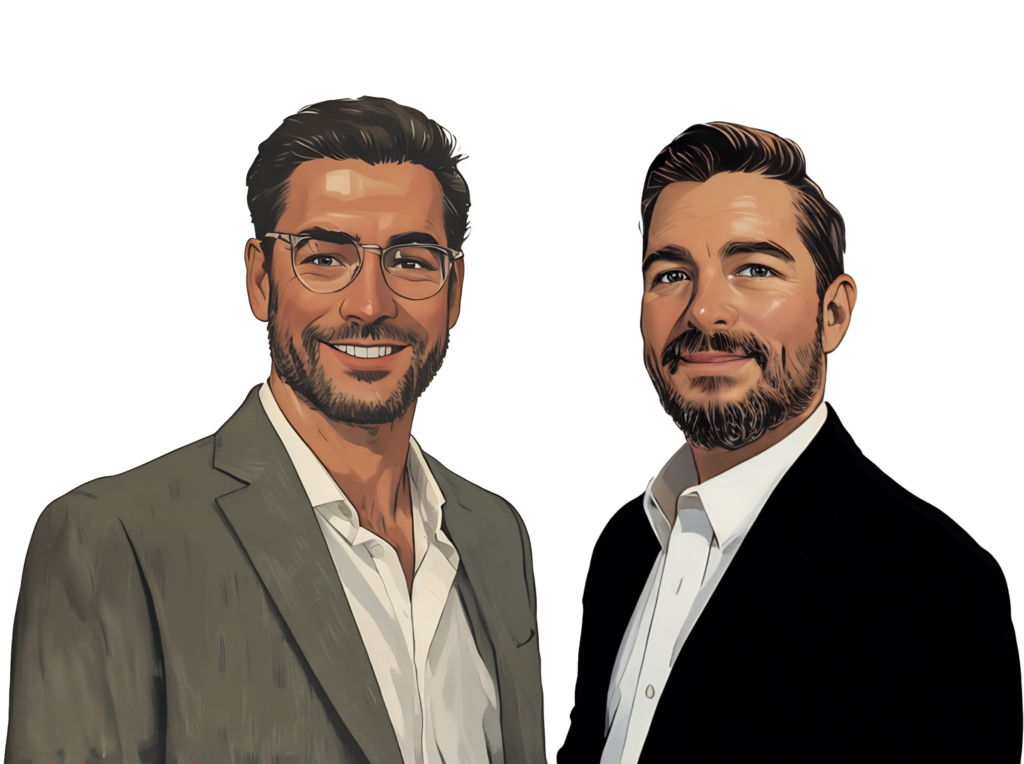
ABOUT THE INTERVIEW GUYS (JEFF GILLIS & MIKE SIMPSON)
Mike Simpson: Co-founder of The Interview Guys and Longbow. He has been the voice behind our interview advice since 2013 — his work has reached over 100 million job seekers around the world. The strategic mind behind Longbow, our new career platform.
Jeff Gillis: Co-founder of The Interview Guys and Longbow. He built the systems that put our work in front of those readers, and he leads the engineering on Longbow, the cutting edge career platform built for today’s job seeker.