
Why Gen Z Burns Out at 25 Instead of 42 – And What It Means for Career Advancement
If you’re a Gen Z worker wondering why you’re already exhausted before hitting 30, you’re not imagining it. The data confirms what you’re experiencing: your generation is burning out at an unprecedented rate, and it’s happening nearly two decades earlier than it did for previous generations.
According to comprehensive research from Deloitte’s 2025 survey of over 23,000 Gen Z and millennial workers, 40% of Gen Z workers feel stressed or anxious all or most of the time. But here’s the statistic that should make every employer pay attention: Gen Z hits peak burnout at just 25 years old, compared to 42 for the average American worker.
This isn’t a story about a generation that can’t handle pressure. This is about systematic changes in how work functions that are breaking people earlier and faster than ever before. By the end of this article, you’ll understand exactly why this is happening, how it’s reshaping career expectations, and what you can do to protect yourself while building the career you actually want.
Understanding workplace burnout is critical for navigating the modern job market, whether you’re entering the workforce or trying to understand why talented young employees keep leaving.
☑️ Key Takeaways
- Gen Z experiences peak burnout at age 25, a full 17 years earlier than the average American worker who burns out at 42, fundamentally changing how this generation approaches career advancement and leadership roles.
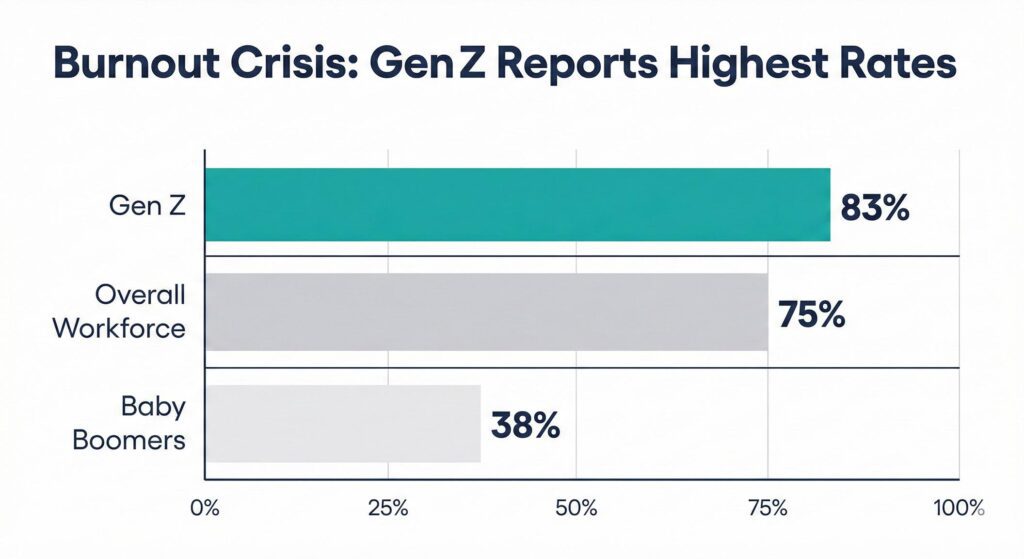
- 83% of Gen Z workers report burnout symptoms compared to 75% of the overall workforce, with financial pressure, entry-level job scarcity, and AI workplace restructuring driving this crisis.
- Only 6% of Gen Z want leadership positions because they’ve watched burnout destroy previous generations, making their career choices strategic rather than entitled.
- The economic math doesn’t work for young workers: 48% live paycheck to paycheck while facing a job market with 29% fewer entry-level positions since 2024, creating impossible pressure.
The Burnout Statistics You Need to Know
Let’s start with the hard numbers that reveal just how severe this crisis has become.
Globally, a survey covering 11 countries and more than 13,000 frontline employees and managers found that 83% of Gen Z workers report feeling burnt out, compared to 75% of employees overall. That might not seem like a huge difference until you realize this is happening to people in their early 20s, not their 40s.
In the United States specifically, a poll of 2,000 adults discovered that a quarter of Americans are burnt out before they’re 30 years old. A British study measuring burnout over an 18-month period after the COVID-19 pandemic found Gen Z members reporting burnout levels of 80%.
According to research from Seramount, 77% of millennials and 72% of Gen Z report experiencing at least one symptom of burnout, such as exhaustion or feeling unmotivated, compared to 62% of Gen X and just 38% of Boomers.
The generational divide in burnout experiences has never been wider, and it’s creating fundamental shifts in how young workers approach their careers.
Interview Guys Tip: If you’re experiencing burnout symptoms before age 30, you’re not weak or unable to handle work. The workplace structure itself has changed in ways that accelerate burnout, and recognizing this helps you make strategic decisions about your career path rather than questioning your capabilities.
Why Gen Z Burns Out 17 Years Earlier
The shift from peak burnout at 42 to peak burnout at 25 didn’t happen by accident. Three major factors converge to create perfect storm conditions for young workers.
Financial Pressure That Previous Generations Didn’t Face
The economic reality for Gen Z is fundamentally different from what previous generations experienced at the same age. According to Deloitte’s research, 48% of Gen Z workers live paycheck to paycheck, up from 30% in 2019. That’s a 60% increase in financial insecurity in just a few years.
Many Gen Z workers entered the job market carrying significant student loan debt. When you combine that with a difficult job market where entry-level job postings have declined 29% since January 2024, the financial math simply doesn’t work for many young workers.
The promise that education would lead to financial stability has collided with an economy that isn’t delivering on that promise. This creates constant stress that bleeds into every aspect of work performance and mental health.
A Job Market That Excludes Entry-Level Workers
Gen Z faces a 58% unemployment rate compared to just 25% for previous generations at graduation. Read that again: more than half of Gen Z graduates can’t find jobs, making them fight the hardest battle for entry-level positions of any recent generation.
The 2025 job market has been characterized by what economists call a “low-hire, low-fire” economy. Companies aren’t laying off workers en masse, but they’re not hiring either. This creates a particularly difficult situation for Gen Z workers trying to enter the workforce or advance their careers.
Those already working face limited opportunities for advancement or salary increases. According to the Indeed Wage Tracker, advertised wages in job postings grew just 2.5% year-over-year by late 2025, actually running behind inflation. For workers who changed jobs hoping for a raise, the math often didn’t work out.
Understanding how long it takes to get a job offer in 2025 helps set realistic expectations in this challenging market.
AI Restructuring Work Itself
As workplace strategist Ann Kowal Smith noted, Gen Z is the first generation to enter a labor market defined by a “new architecture of work: hybrid schedules that fragment connection, automation that strips away context, and leaders too busy to model judgment.”
This restructuring creates unique challenges. Hybrid schedules mean Gen Z workers often lack the in-person mentorship and connection that helped previous generations navigate early career challenges. Automation handles routine tasks but strips away the context that makes work meaningful. Leaders stretched thin don’t have time to provide the guidance young workers need.
The result is a workplace where Gen Z feels simultaneously overworked and unsupported, with unclear paths forward and little sense of purpose in what they’re doing.
How Early Burnout Changes Career Expectations
When you burn out at 25 instead of 42, it fundamentally changes how you think about career advancement and success.
The Rejection of Traditional Leadership Roles
According to Deloitte’s research, only 6% of Gen Z respondents said their primary career goal is to reach a leadership position. This statistic baffles older generations, but it makes perfect sense when viewed through the lens of early burnout.
Gen Z has watched millennials and Gen X sacrifice their mental health, relationships, and wellbeing for management roles that often deliver questionable rewards. They’ve seen burnout destroy people in their 30s and 40s. Why would they aspire to that?
This isn’t lack of ambition. It’s strategic risk management based on observed outcomes. Gen Z is asking: “If I’m already burnt out at 25, what would becoming a manager at 30 do to me?”
The answer they’re landing on is that traditional leadership roles aren’t worth the cost to their mental health and quality of life.
Interview Guys Tip: When preparing for interviews, frame your career goals around growth, skill development, and impact rather than climbing the management ladder. This aligns with both Gen Z values and modern organizational structures that increasingly value individual contributors who excel in their domains.
Shorter Job Tenure as Growth Strategy
Gen Z’s average job tenure of 1.1 years isn’t disloyalty. It’s growth-hunting ambition in a market where staying put often means stagnation.
When companies aren’t promoting from within and aren’t providing meaningful raises, the fastest way to advance your career and increase your salary is to change employers. Gen Z has figured this out faster than previous generations because they have to.
According to research from Randstad, Gen Z changes jobs more frequently not because they lack commitment but because they’re strategic about maximizing growth opportunities in a market that doesn’t reward loyalty the way it once did.
Mental Health as Non-Negotiable Priority
SHRM research finds that 61% of Gen Z workers would strongly consider leaving their current job if they were offered a new one with significantly better mental health benefits. This isn’t weakness. It’s wisdom learned from watching previous generations sacrifice wellbeing for career advancement.
According to LIMRA’s 2024 BEAT study, 91% of Gen Z workers report experiencing mental health challenges at least occasionally. When burnout hits at 25 instead of 42, you learn early that mental health isn’t something you can sacrifice for decades and then address later.
This makes Gen Z the first generation to treat mental health benefits and workplace psychological safety as essential rather than nice-to-have perks.
The Hidden Cost to Companies
While this article focuses on what Gen Z workers experience, the business implications are staggering.
Early burnout costs businesses $322 billion annually in lost productivity, with healthcare costs reaching $190 billion. When your workforce burns out at 25 instead of 42, you’re losing productive years from people who should be in their career prime.
According to research from TestGorilla, companies implementing true support systems see 35% improvement in retention rates for younger workers. But most organizations haven’t adapted their structures to address early-onset burnout.
The companies that figure this out first will have a massive competitive advantage in attracting and retaining Gen Z talent. Those that don’t will continue losing talented workers after investing in their training and development.
What Gen Z Workers Can Do Right Now
Understanding why burnout happens earlier for your generation doesn’t solve the problem, but it does help you make better strategic decisions.
Set Boundaries Before You Need Them
Don’t wait until you’re burnt out to establish work-life boundaries. Research shows that employees who set clear boundaries from the start of their careers maintain better mental health over time than those who try to implement boundaries after burnout hits.
This means negotiating work hours, protecting personal time, and being willing to say no to requests that push you beyond sustainable capacity. It feels risky early in your career, but it’s essential for longevity.
Prioritize Companies With Proven Mental Health Support
During your job search, ask specific questions about mental health benefits, psychological safety, and how the company supports work-life balance. Don’t accept vague answers about “we care about our people.”
Look for companies that offer robust Employee Assistance Programs, mental health days separate from sick leave, flexible scheduling options, and manager training on supporting employee wellbeing.
Our guide on what to say during an interview includes specific questions you can ask to evaluate company culture.
Build Financial Resilience However You Can
The connection between financial stress and burnout is direct. The more financially precarious your situation, the harder it is to make career decisions that protect your mental health.
This might mean living below your means while building an emergency fund, developing side income streams, or choosing employers that offer better financial stability even if the base salary is slightly lower. Financial flexibility gives you options when burnout hits.
Diversify Your Career Skills
Gen Z’s instinct to maintain multiple skill sets across different industries isn’t scattered focus. It’s strategic career insurance in an unstable market.
According to research from CompTIA, Gen Z workers are more likely to pursue multiple certifications and maintain diverse skill portfolios than previous generations. This provides career resilience when one industry or role becomes unsustainable.
Interview Guys Tip: When describing your diverse skills and interests in interviews, frame them as strategic preparation for a changing job market rather than inability to commit. Employers increasingly value adaptability and cross-functional expertise, especially in younger workers who’ll need to navigate decades of technological change.
The Broader Implications for Career Planning
Peak burnout at 25 instead of 42 changes everything about how Gen Z should approach career planning.
Traditional career advice assumed you’d build intensity in your 20s and 30s, peak in your 40s, then coast toward retirement. That model doesn’t work when burnout hits before age 30.
Instead, Gen Z needs to think about careers as marathons that require sustainable pacing from day one. This means prioritizing roles and companies that support long-term wellbeing, even if they offer slightly lower compensation or slower advancement in the short term.
It means recognizing that protecting your mental health isn’t something you do after you’ve “made it.” It’s something you do from your first job to ensure you can sustain a 40-50 year career.
Understanding the generational workplace dynamics helps you navigate these different expectations across age groups.
The Path Forward
Gen Z’s experience with early burnout is revealing what’s broken in modern workplace structures. Rather than dismissing young workers as unable to handle pressure, smart companies are learning from their feedback and restructuring work to be more sustainable.
The generation that burns out at 25 is also the generation most willing to demand change. They’re rejecting unsustainable management roles, prioritizing mental health, and choosing employers who demonstrate genuine commitment to employee wellbeing.
This isn’t weakness. It’s the beginning of a necessary transformation in how we structure work for long-term human sustainability.
If you’re part of Gen Z, understand that your burnout isn’t a personal failure. It’s a systemic problem that requires systemic solutions. Focus on building a career that’s sustainable for decades, not just impressive for the next year.
The companies and career paths that work for Gen Z will ultimately work better for everyone. You’re not just protecting yourselves by demanding change. You’re fixing what’s broken for all workers.
Sources:
- Deloitte Global Gen Z and Millennial Survey 2025
- Seramount Mental Health Research 2025
- The Conversation: Gen Z Burnout Analysis
- SHRM Gen Z Mental Health Research
- CompTIA Job Seeker Trends 2025

BY THE INTERVIEW GUYS (JEFF GILLIS & MIKE SIMPSON)
Mike Simpson: The authoritative voice on job interviews and careers, providing practical advice to job seekers around the world for over 12 years.
Jeff Gillis: The technical expert behind The Interview Guys, developing innovative tools and conducting deep research on hiring trends and the job market as a whole.