
Reading Between the Lines: What Job Postings Actually Mean (A Research Report)

Job postings have their own secret language. The buzzwords aren’t random filler, they’re consistent signals of overwork, weak boundaries, hidden pay, and bias.
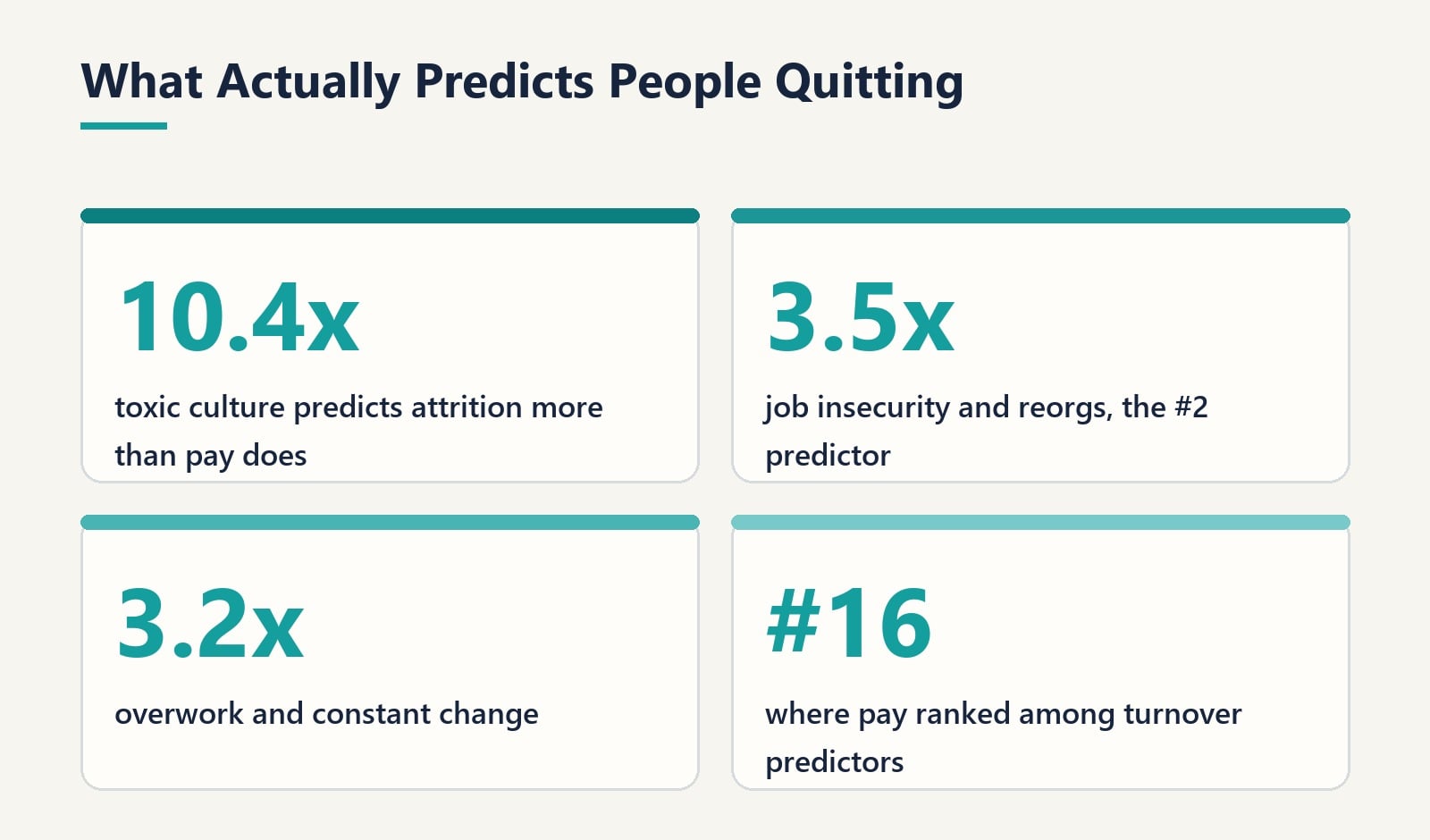
Here’s the part companies don’t want you to know: a toxic corporate culture is 10.4 times more powerful than compensation in predicting whether people quit, according to MIT Sloan. The clues to that culture are often sitting right there in the posting.
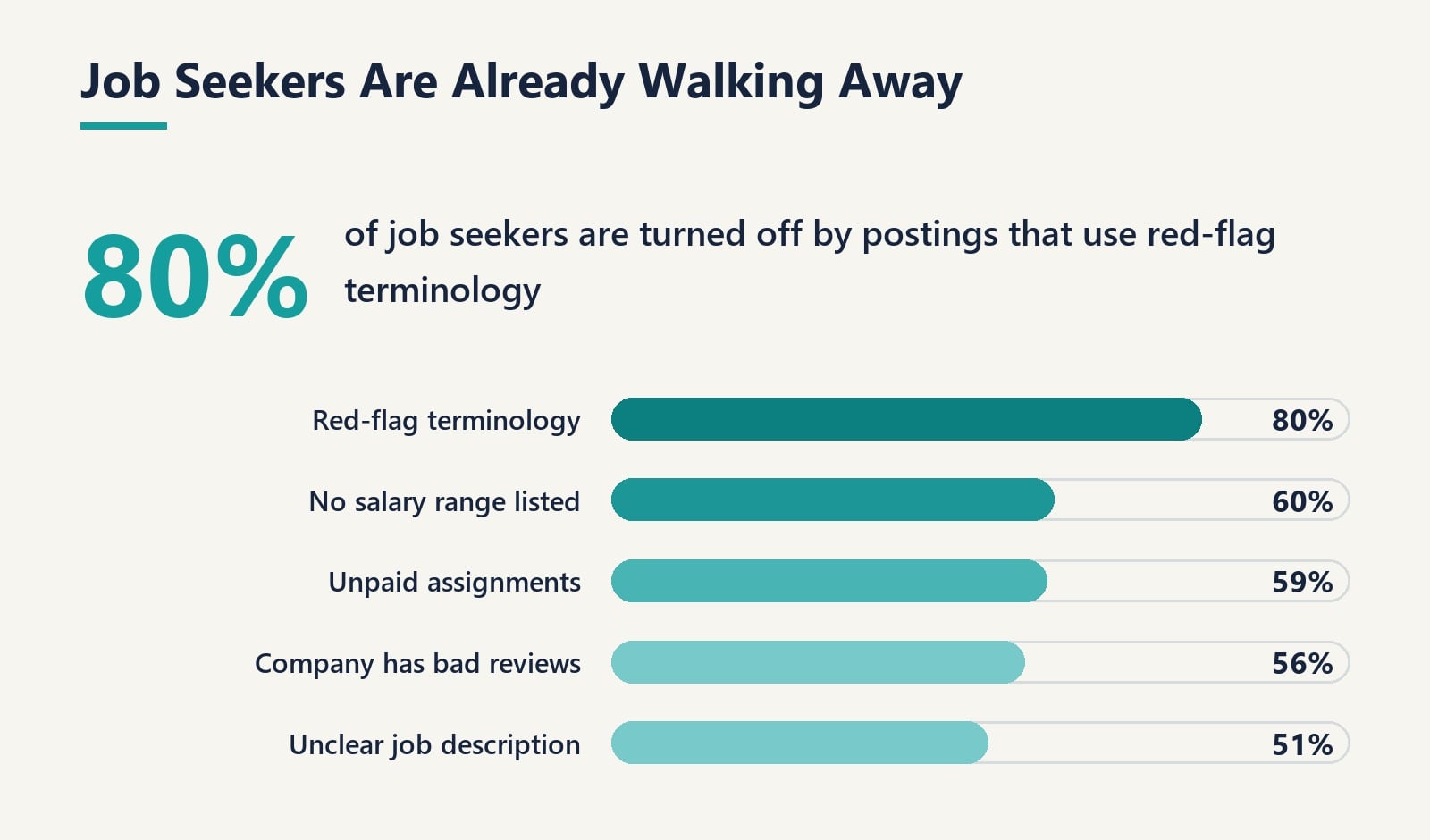
The good news? Job seekers are already fighting back. Eight in 10 say they’re turned off by red-flag terminology, per an Ipsos survey for Randstad reported in The Globe and Mail.
This is your decoder. We’re translating the phrases and handing you the receipts so you can read any posting like an insider.
☑️ Key Takeaways
- Toxic culture predicts turnover 10.4x more than pay, and postings leak the warning signs (MIT Sloan).
- “Customer-obsessed” and “wear many hats” tie as the most-hated phrases, each a dealbreaker for 33% of job seekers (Adobe).
- 84% of job seekers think vague pay language exists to weaken their negotiating power (Patriot Software).
- Masculine-coded words measurably shrink your applicant pool: postings that hired a man averaged nearly 2x more masculine-tone phrases (Textio).
- Red-flag phrasing is rising, not falling, and firms that use more of it fill roles more slowly (Revelio Labs).
“Energy” Words That Really Mean You’ll Do Three Jobs
This family of phrases dresses up short-staffing and burnout as pace and passion. When a company sells you on speed, ask what they’re not staffing.
And these aren’t fringe complaints. Revelio Labs found more than half of postings at Starbucks and Bank of America included at least one red-flag phrase, and the share keeps climbing.
“Fast-paced environment” We’re understaffed and you’ll be overwhelmed with no support. It’s one of the most-flagged phrases around, a dealbreaker for 25% of job seekers, and Revelio Labs found companies lean on it when they’re masking staffing shortages and hard-to-fill roles.
“Wear many hats” We’re understaffed, so you’ll do several jobs for one salary. It typically means juggling multiple roles with extra work but no extra pay, a sign the company hasn’t invested in structure or staffing, per Forbes. It also ties for the single most-hated phrase, a dealbreaker for 33% of job seekers (Adobe).
“Self-starter” You’ll get little training, onboarding, or support, so figure it out alone. It signals minimal supervision and an expectation to just “figure it out,” which frequently leads to burnout when resources are stretched, according to Truity. Recruiters bundle it with “multi-task” and “wear many hats” as understaffing tells (Sheldrake Consulting).
“Roll up your sleeves” Everyone, regardless of title, does grunt work, so don’t expect boundaries. It’s read as everyone being expected to pitch in on basic tasks, a red flag for undefined roles, per Forbes.
“Work under pressure / handles stress well” The job is demanding, chaotic, and light on work-life balance. Revelio Labs groups these among phrases that signal a toxic culture, and found firms using more of them have a harder time filling openings.
“High sense of urgency” A relentless pace with no boundaries, no matter the workload. It’s a dealbreaker for 29% of job seekers and lands in the top five turnoff phrases, according to Adobe data reported by Entrepreneur.
“Entrepreneurial” In sales, this is code for cold-calling and self-generated leads with little support. A recruiter in The Globe and Mail says an “entrepreneurial” ask in sales means literally knocking on doors, and that “they want you to do a lot of everything.”
“Other duties as assigned” Unlimited, undefined scope expansion. Without boundaries, this opens the door to a job that bears no resemblance to what was advertised, which is why we flag it in our own red flags guide.
Warm Fuzzies That Mask Bad Boundaries
Warmth and hype are the friendliest-sounding red flags. They feel like culture perks until you notice they all quietly ask for your evenings, your weekends, and your emotional labor.
If you’re heading into interviews with any of these companies, our phone interview prep is a good place to line up the boundary questions you’ll want answered early.
“We’re a family” Expect blurred boundaries, unpaid overtime, and loyalty guilt-trips. Experts flag it as code for blurred personal and professional lines and unrealistic expectations around loyalty, overtime, and emotional labor, per Forbes. Career coaches widely decode it the same way, as emotion over process (The CS Cafe).
“Work hard, play hard” Long hours and intense expectations dressed up as fun, often bro culture. Workplace-culture writers describe it as frequently masking long hours and weak work-life balance, per Truity.
“Customer-obsessed” You’ll be expected to be always available, with boundaries as an afterthought. It’s the single most-cited turnoff phrase (tied), a dealbreaker for 33% of job seekers, yet roughly 1 in 7 hiring managers still use it, according to Adobe.
“Rockstar / ninja” We want one superstar to do a whole team’s work, personality over substance. These buzzwords often lack substance and signal a culture that expects high performance without matching support, per Forbes, and “rockstar” is a dealbreaker for 32% of job seekers (Adobe data via Entrepreneur).
“Passionate” We expect enthusiasm to substitute for fair pay and reasonable hours. This one is largely anecdotal, but career writers widely read emotion-over-process framing as a way to normalize unpaid extra effort (The CS Cafe).
“Occasional evenings and weekends” Expect to be on call or cover shifts on short notice. Experts warn it can suggest an expectation to be available 24/7 or to cover off-hours on short notice, per The Globe and Mail.
“Unlimited PTO” In practice people take less time off, and there’s no earned balance to cash out. While 71% of job seekers prioritize PTO, nearly 1 in 10 are actively wary of unlimited PTO because norms often discourage taking it, according to Adobe.
Pay Language That’s Designed to Keep You Guessing
Vague compensation language isn’t laziness, it’s strategy. When a company won’t name a number, it usually wants the freedom to anchor you low.
This matters more than culture debates suggest. Weirdly, how employees rated compensation ranked only 16th among topics predicting turnover in MIT Sloan’s analysis. But hidden pay still tells you how a company negotiates.
“Competitive salary” We won’t tell you the number, often because it’s at or below market. Experts warn vague pay language may indicate below-average compensation, and that “competitive” without specifics is probably at or below industry standards, per The Globe and Mail.
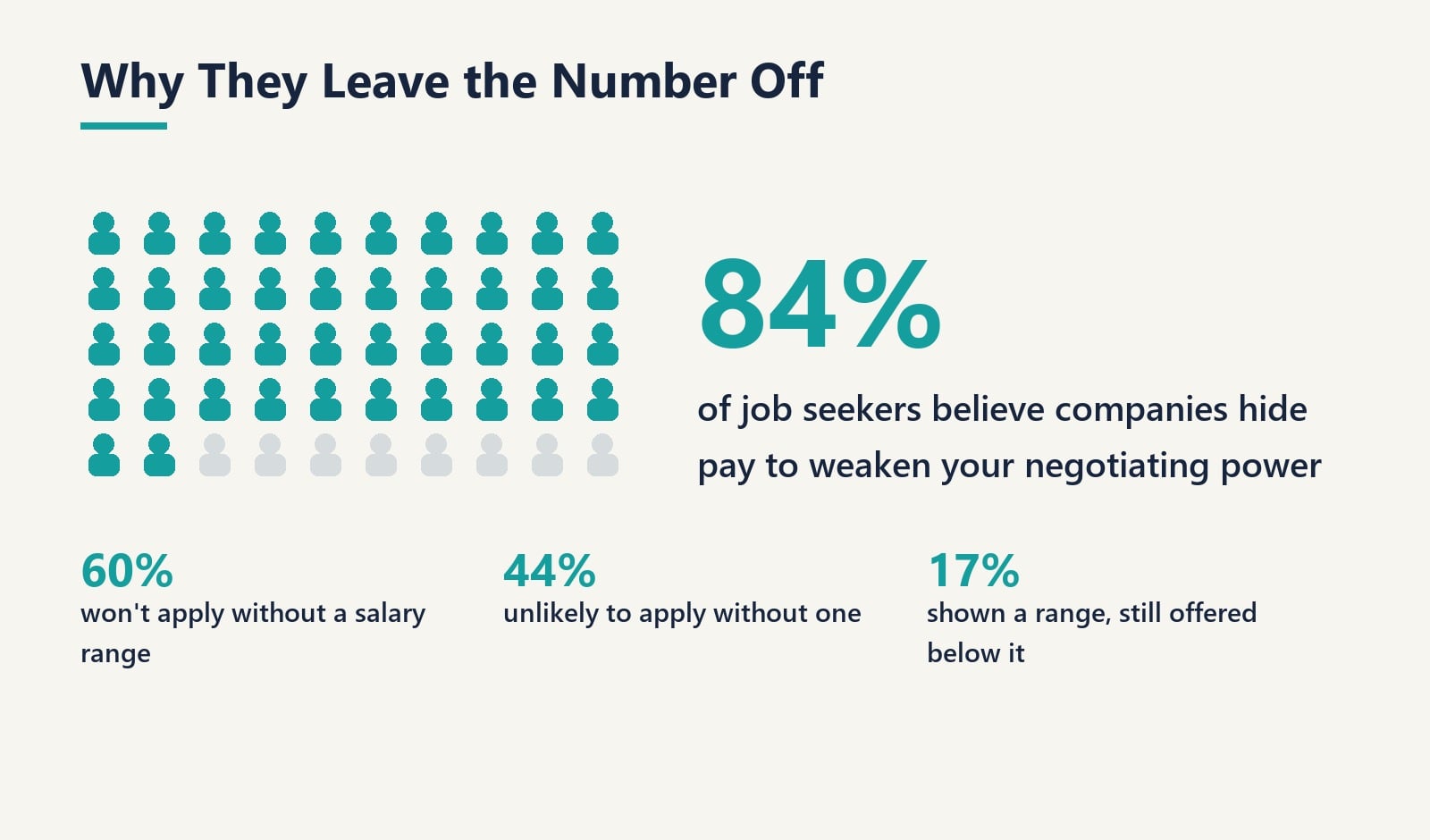
“Commensurate with experience / DOE” Pay is undefined so we can anchor you low based on what you’ll accept. 84% of surveyed job seekers believe companies hide pay to reduce workers’ negotiating power, and 17% who were shown a range still got an offer below it, per Patriot Software.
“Unpaid but great exposure” Free work traded for a vague future benefit that rarely arrives. 59% of workers say roles requiring unpaid assignments or extensive take-home work make them least likely to apply, according to Monster. If you need to build skills without working free, look at real resume-building side hustles instead.
“Very wide salary range” (say $120k to $200k) We either don’t know what this role is, or we want you to imagine the top and accept the bottom. Practitioners read ultra-wide ranges as compliance with transparency laws without real transparency. As one exec recruiter put it, a range that wide tells a top candidate the company has no idea what the role actually does (ExecSearches).
“No salary range listed” The number is either not competitive or fully negotiable down. 60% of job seekers say they won’t apply to postings without a salary range, according to Monster, and 44% say they’re unlikely to apply per Patriot Software.
Chaos, Repackaged as Opportunity
Some phrases take disorganization and churn and rebrand them as excitement. “Ambiguity” sounds adventurous until you realize it means nobody knows what success looks like.
And instability is expensive. Job insecurity and reorganization is the second-strongest predictor of attrition, at 3.5x compensation, per Forbes reporting on MIT Sloan.
“Thrives in ambiguity” We have no clear direction, so you’ll absorb the chaos. Vague success criteria (“you’ll figure it out”) is a classic red flag, and experts advise asking employers to define success at 90 and 180 days with real metrics, per The CS Cafe.
“Scrappy” Under-resourced, so do more with less and don’t ask for budget. This is largely anecdotal, but career writers consistently read it as framing a lack of resources as a virtue (The CS Cafe).
“Move fast” Constantly shifting priorities and high stress from perpetual change. High levels of innovation, linked to long hours and constantly shifting priorities, rank among the top five predictors of attrition at 3.2x compensation, per Forbes and MIT Sloan.
“Comfortable with change” Reorgs, role shifts, and instability are routine here. Job insecurity and reorganization is the second-strongest attrition predictor after toxic culture, at 3.5x compensation, according to MIT Sloan via Forbes.
“Urgent hire / hiring immediately” High turnover, because people keep leaving this role. It’s flagged as a possible turnover signal, since an “urgent” opening can mean previous team members left unhappy, per Truity.
“Duties may vary” Undefined, expanding scope, so you may not know what you’re signing up for. One in three job seekers is wary of postings using “duties may vary,” and eight in 10 are turned off by red-flag terminology overall, per an Ipsos survey for Randstad in The Globe and Mail. Unclear descriptions also make 51% of candidates walk (Monster).
Coded Words That Quietly Screen People Out
This is the sneakiest category, because it doesn’t read like bias at all. Certain words measurably shift who applies by gender or age, even when nothing in the posting explicitly excludes anyone.
The landmark research here is decades deep. Gaucher, Friesen and Kay showed in the Journal of Personality and Social Psychology that masculine wording lowers women’s interest in a job by reducing their sense of belonging (Gaucher et al., 2011).
“Aggressive / competitive / dominant” Masculine-coded terms that measurably deter women from applying. Masculine-themed wording lowers women’s job interest and belonging, sustaining gender imbalance in male-dominated fields, per Gaucher, Friesen and Kay (2011), and Textio confirms these words attract more male applicants in real hiring outcomes.
“Exhaustive / enforcement / fearless” Subtle masculine-coded words that never show up on a bias checklist. Textio flags these as masculine-tone (and “transparent,” “catalyst” and “in touch with” as feminine-tone), patterns found only by measuring actual hiring outcomes.
“Rockstar / ninja” (the bias angle) Hero-worship language that quietly skews your applicant pool male. In Textio testing reviewed by Index.dev, “rockstar/ninja” phrasing consistently pushed gender meters toward masculine language, and the tool suggested neutral verbs like “lead” and “build” instead.
“Digital native” Age-coded shorthand for we want younger applicants. Phrases like “digital native” shifted a posting’s age appeal sharply younger in Textio testing, and removing them broadened the age curve, per Index.dev.
“Recent grad” Age-coded preference for younger, cheaper workers. Textio flags “recent graduate” and “digital native” as language that discourages older candidates and may violate age-discrimination laws, per Index.dev. If you’re early-career, target the markets where it counts using our roundup of cities hiring new grads.
“Culture fit” We hire people like us, which is often a vector for bias. This one is largely anecdotal, but hiring experts widely warn that undefined “fit” invites subjective, homogeneity-favoring decisions (Welcome to the Jungle).
The gender-tone gap, quantified The wording literally predicts who gets hired. In jobs where a man was hired, the original posting averaged nearly twice as many masculine-tone as feminine-tone phrases, according to Textio.
The Gender Code: How One Word Decides Who Applies
Here’s a secret hiding in plain sight. The words in a job ad don’t just describe the role. They quietly select who feels welcome to apply.
Back in 2011, researchers Gaucher, Friesen and Kay ran the experiment that cracked this open. They coded 3,640 real job ads and ran controlled studies, and found that masculine-worded postings made women feel like they belonged less. Not less qualified. Less like they fit. That paper has been cited over 800 times.
The numbers are almost eerie. Women rated masculine-coded ads less appealing (4.16 versus 4.50 on a six-point scale) and reported a lower sense of belonging, according to the Harvard Kennedy School summary. Same job, different words, different gut reaction.
Then the software companies got the receipts. Textio analyzed enterprise hiring outcomes and found that when a man got hired, the original posting averaged nearly twice as many masculine phrases as feminine ones. When a woman got hired, the pattern flipped. The language predicted the hire before anyone applied.
So what counts as coded? Masculine-tone words like aggressive, competitive, dominant, ninja, rockstar, fearless, exhaustive. Feminine-tone words like collaborative, support, together, transparent, catalyst, community. Textio’s whole point is there’s no fixed dictionary, a phrase is gendered if it statistically shifts who applies.
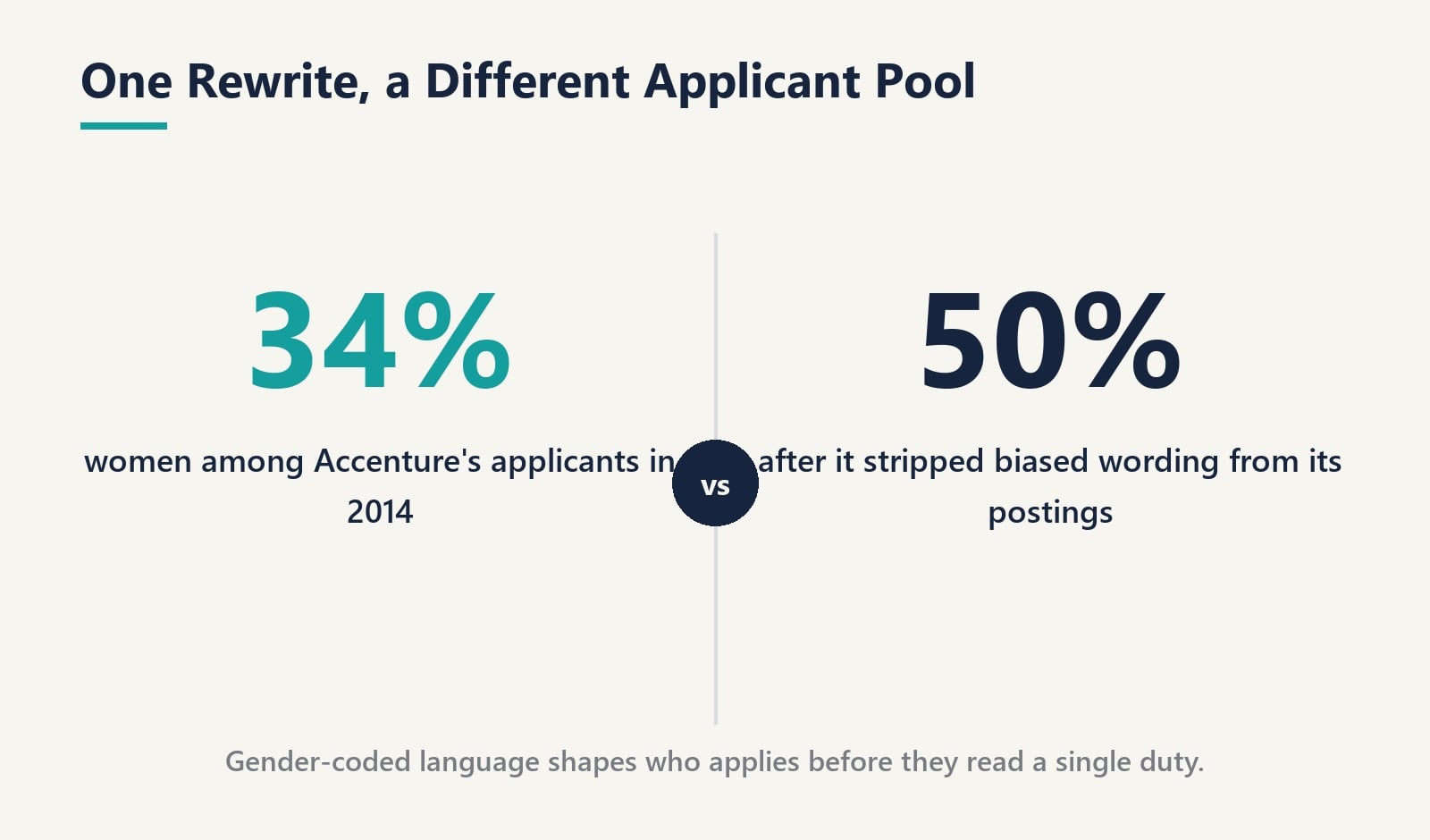
And the payoff for fixing it is real. Expedia saw 8% more women apply when job tone leaned feminine, holding job type constant. Neutral postings fill three weeks faster. Accenture watched female applicants climb from 34% to 50%, and one Australian software firm saw an 80% jump in women hired into technical roles after dropping phrases like coding ninja, per STEM Women.
One honest caveat: the science is still fighting it out. A massive MIT Sloan study of 487,000 job seekers found no practical effect, while a 2025 PNAS field study found debiasing did widen the pool. Treat it as contested. But when the words are free to change, why gamble?
The Industries That Talk in Code the Most
Some sectors sprinkle in a buzzword. Others build entire postings out of them. And the data shows exactly who the worst offenders are.
SimpleTexting scanned more than 6.6 million LinkedIn postings and found 43% packed with corporate jargon. Marketing ran away with the title, cramming over 1,027 jargon-laden posts per 1,000 ads. Think thought leader, leverage, disruptor. Finance came second at roughly 947 per 1,000. Tech landed third at 679.
Canva backed up the pattern with its own sweep of 6.3 million job ads, finding 38% stuffed with confusing jargon and business clichés. So this isn’t a few rogue recruiters. It’s a language epidemic.
Each sector has a signature dialect. Marketing and agencies reach for synergy, ideate, move the needle, guru. Finance loves results-driven, high-performing, win-win, fast-paced environment. Tech and startups deploy the whole fantasy cast: ninja, rockstar, wizard, Jedi, unicorn, 10x, disrupt, growth hacking. Amazon alone used wickedly 33 times and maniacal 11 times more than the rest of tech.
And workers? They hate it. A Preply survey of over 1,000 Americans found 55% view buzzwords negatively, and exactly zero said buzzwords made them eager to apply, per the World Economic Forum. The most annoying phrase of all was like a family at 38%, with fast-paced environment close behind at 37%.
The bigger Preply survey of 1,551 respondents crowned rockstar the number one red flag at 53%, trailed by wear many hats (50%), thick skin (48%) and work hard play hard (47%). Seven in ten said trendy language shaped whether they applied, and nearly one in five walked away because of it.
Read the code and you read the culture. Like a family in a nonprofit often masks vague pay. Wear many hats in healthcare hints at doing three jobs for one paycheck. Thick skin in sales flags a pressure cooker. For a deeper decoder, our guide to job posting red flags breaks down what these phrases really signal before you hit apply.
When the Job Isn’t Even Real
Now for the plot twist. Sometimes the coded language isn’t hiding a bad culture. It’s hiding the fact that there’s no job at all.
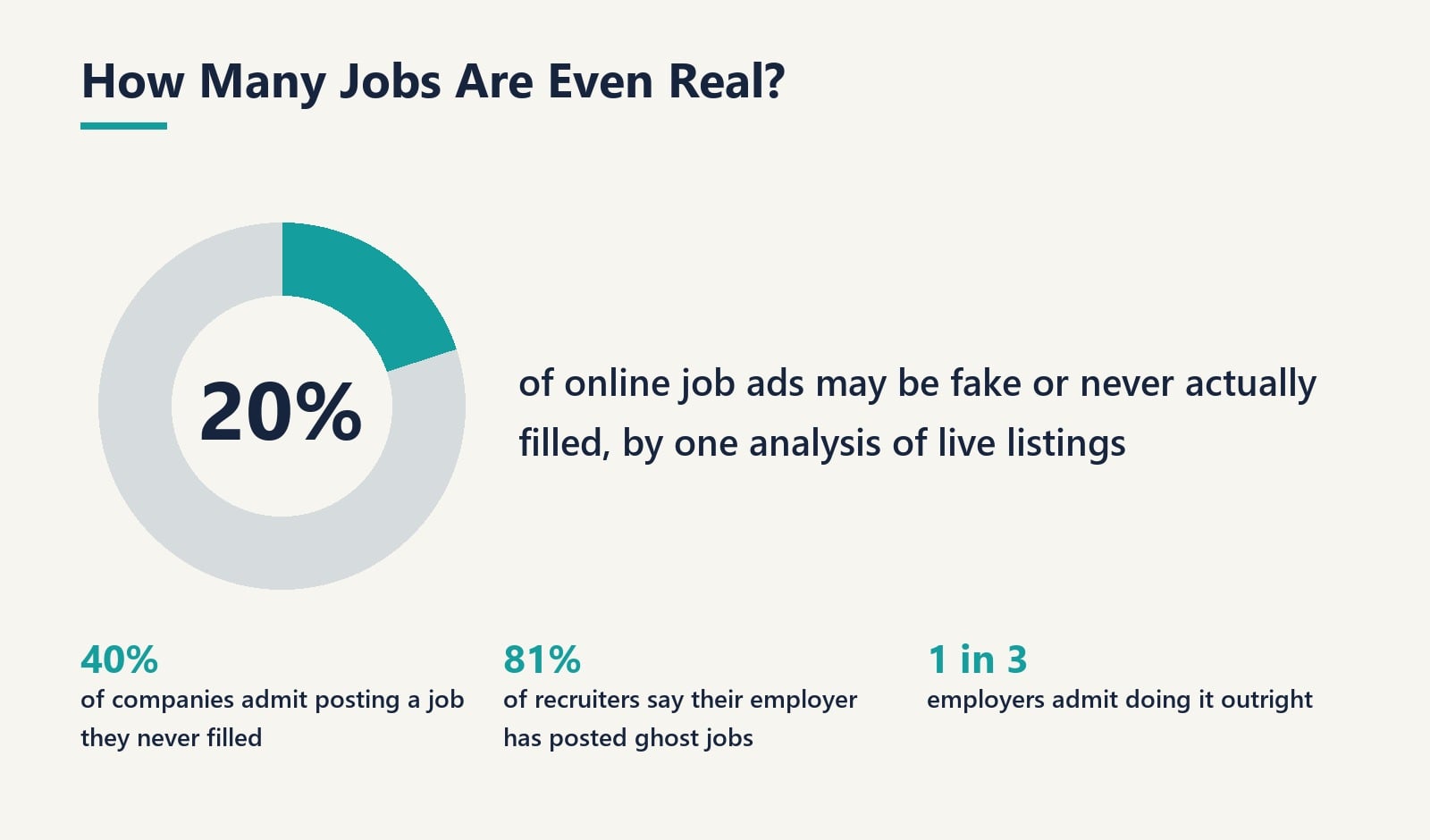
Welcome to ghost jobs, the listings that exist to look busy while nobody gets hired. Greenhouse platform data classified roughly 18 to 22% of postings as fake or unfilled. That’s at least one in five.
And it gets more uncomfortable the closer you look. ResumeBuilder found 40% of companies posted at least one fake job in the past year, with 30% running a ghost listing right now. Clarify Capital surveyed over 1,000 employers and reported nearly 1 in 3 admitting they post with no intention to hire.
The recruiters are even blunter. A MyPerfectResume survey found 81% of recruiters admit their employer has posted ghost jobs. ResumeUp.AI’s analysis pegged 27.4% of active US LinkedIn listings as likely ghosts, peaking in Los Angeles at 30.5%.
Why fake it? Clarify Capital found 43% do it to look like they’re growing when they aren’t, 50% claim they’re always open to new people, and 35% want a pipeline in case an irresistible candidate strolls by.
Notice the theme: none of those motives require a real, budgeted role.
Which is exactly why the language gives it away. To stay evergreen, a fake posting has to stay generic. Vague duties. No salary range. Boilerplate about communication and leadership skills. Overuse of buzzwords in place of concrete responsibilities. Pipeline framing like we’re always looking for great people.
So here’s the tie-back. The coded, jargon-heavy, say-nothing wording you learned to distrust in the last two sections is itself a ghost-job tell. Real roles have specifics because someone signed off on a budget and a scope. If a listing reads like fog, treat the fog as the signal, and move on to a posting that actually wants you.
How to protect yourself
- Count the red-flag phrases. One is noise, a cluster of “fast-paced,” “wear many hats,” and “self-starter” is a pattern.
- Never treat “competitive salary” as an answer. Ask for the range early, since 60% of job seekers won’t even apply without one (Monster).
- Run a suspicious posting through the free Gender Decoder to catch coded language before you assume it’s neutral.
- Ask the culture question directly: what does success look like at 90 and 180 days, with metrics? Vague answers confirm the “thrives in ambiguity” translation.
- Cross-check reviews and turnover. 56% of candidates skip companies with negative reviews for good reason (Monster).
- Build your own leverage so you can walk away, whether that’s stackable micro-credentials or a sharper Open to Work setup that keeps better offers coming to you.
Here’s the pattern once you see it: these euphemisms aren’t accidents. They’re consistent signals of overwork, weak boundaries, hidden pay, and bias, and the data keeps proving job seekers are right to flinch.
The frustrating part? Red-flag phrasing is actually rising, not falling, even as workers push back, per Revelio Labs. So the burden of decoding is on you for now.
Read every posting twice from here on. First for the job, then for the tells. When you spot a cluster of these phrases, treat it as your cue to ask sharper questions before you ever say yes, and to keep building leverage on the side, since your side hustle can be your best job-search tool.
Sources and further reading
- MIT Sloan, Toxic Culture Is Driving the Great Resignation
- MIT Sloan, Why Every Leader Needs to Worry About Toxic Culture
- Textio, Language in your job post predicts the gender of your hire
- Textio, Watch your (gender) tone
- Gender Decoder for Job Ads (free tool)
- Monster, Job Search Deal-Breakers Report
- Patriot Software, 2026 Pay Transparency Hiring Survey
- Forbes, 10 Job Posting Red Flags And What These Phrases Really Mean
- The Globe and Mail, Top red flags in job postings (Randstad/Ipsos survey)
- Welcome to the Jungle, Spot a toxic workplace before you apply
- Truity, Red Flags in Job Postings by Personality Type
- Winston Resources, How to Decode Job Descriptions
- CFO Dive, Job seekers avoid postings with no salary transparency
- Paycor, Gender Bias in Job Descriptions
- Revelio Labs, Toxic Corporate Culture Is Driving the Great Resignation
- Index.dev, Textio Review 2026 (bias detection tests)
- PR Newswire, Toxic culture, not wages, is driving the Great Resignation (methodology)
- Adobe Acrobat, Top job listing red flags & how to avoid them (survey source)
- Revelio Labs, ‘Work Under Pressure’? Red Flags in Job Postings (HR data)
- Gaucher, Friesen & Kay (2011), Gendered Wording in Job Advertisements (full PDF)
- Harvard Gender Action Portal, summary of Gaucher et al. (2011)
- Strategic Entrepreneurship Journal (2024), replication of Gaucher, Friesen & Kay
- White Recruitment, Salary Transparency (CIPD & LinkedIn stats)
- Matsh, Statistics on Salary Transparency and Job Seekers
- Recruitics, The Impact of Salary Transparency in Job Postings
- Entrepreneur, People Hate These 10 Phrases Common in Job Posts
- The Interview Guys, Job Posting Red Flags decoder
- The CS Cafe, Red Flags in Job Ads (what-it-says → what-it-means table)
- U.S. Bureau of Labor Statistics, wage & occupation data for market benchmarking
After twelve years of writing advice like this, we built the tool that does it with you. It's called Longbow, and here's the whole story.

ABOUT THE INTERVIEW GUYS (JEFF GILLIS & MIKE SIMPSON)
Mike Simpson: Co-founder of The Interview Guys and Longbow. He has been the voice behind our interview advice since 2013 — his work has reached over 100 million job seekers around the world. The strategic mind behind Longbow, our new career platform.
Jeff Gillis: Co-founder of The Interview Guys and Longbow. He built the systems that put our work in front of those readers, and he leads the engineering on Longbow, the cutting edge career platform built for today’s job seeker.