
10 Personal Branding Examples: How 10 Professionals Built Brands That Opened Doors
Your resume gets you in the door. Your personal brand keeps it open.
That distinction matters more now than it ever has. According to LinkedIn’s 2024 Global Talent Trends report, 72% of recruiters use LinkedIn to find candidates, and they’re assessing far more than job titles. They’re looking at how you show up, what you say, and whether your story makes sense. Research shows that professionals with strong LinkedIn profiles are 40 times more likely to attract job offers.
But the professionals who really stand out aren’t just optimizing one platform. They’re building something bigger: a personal brand that travels with them across every touchpoint, from their website to their inbox.
This article breaks down 10 real professionals who built personal brands that genuinely opened doors, and what you can take from each of them.
☑️ Key Takeaways
- A strong personal brand works for you 24/7, showing up in recruiter searches and opening inbound opportunities you never had to apply for
- Consistency across platforms matters more than polish — your LinkedIn, website, and resume should tell one coherent story
- Every professional, not just creatives, benefits from a personal brand that clearly communicates their niche and unique value
- A personal website is the cornerstone of your brand because it’s the one place online you fully own and control
Disclosure: This article contains affiliate links. If you purchase through these links, we may earn a commission at no additional cost to you.
What Makes a Personal Brand Actually Work?
Before we get into the examples, it helps to understand what separates a personal brand that attracts opportunities from one that just takes up space online.
At its core, personal branding is the way you present your professional self to the world. It includes your resume and LinkedIn profile, but also extends to your online presence, your portfolio, your thought leadership content, and even the way you network.
The most effective personal brands share three qualities:
- Clarity — You know exactly who you’re talking to and what you offer them
- Consistency — Your message, tone, and visuals match across every platform
- Credibility — You back up your claims with evidence, not just assertions
When all three click, recruiters stop skimming and start reaching out. Let’s look at professionals who got this right.
In our experience helping over 100 million job seekers, the candidate with a professional website consistently stands out over equally qualified applicants who only submit a resume. That website is your unfair advantage…
200 Applicants Have Resumes. Only You Have a Website…
We recommend Squarespace because it gives you a professional online presence that makes you memorable. Choose from designer templates, customize without coding, and create a portfolio that actually gets you interviews. Free 14-day trial, and you can launch your site before other candidates finish tweaking their resume.
10 Personal Branding Examples Worth Studying
1. Lauren Hom — The Lettering Artist Who Became Her Brand
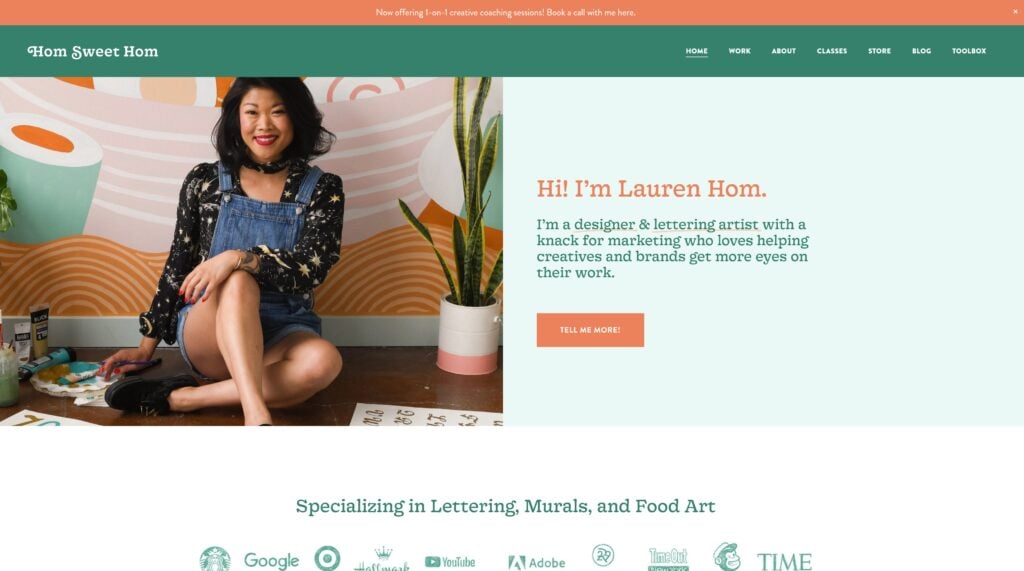
Lauren Hom is a lettering artist and designer whose personal branding is a masterclass in letting your craft define your visual identity. Her logo is custom-lettered, and you’ll find expressive lettering styles, illustrations, and typography sprinkled thoughtfully throughout her site. As a client, you can immediately understand what to expect from Lauren if you were to hire her.
That’s the key lesson here: your brand should be a preview of working with you. Lauren doesn’t just tell people she’s a lettering artist. Every element of her site demonstrates it.
What you can steal from Lauren:
- Use your actual skills to build your brand’s visual identity
- Don’t describe what you do — show it at every opportunity
- Your logo, font choices, and color palette should feel like your work, not a generic template
Interview Guys Tip: You don’t have to be a designer for this principle to apply. A data analyst can use charts and clean visual layouts to signal their skills. A writer can show their voice in every word on their site. Let your expertise show up in how you present yourself.
See it live: homsweethom.com
2. Reshma Saujani — Clarity Over Complexity
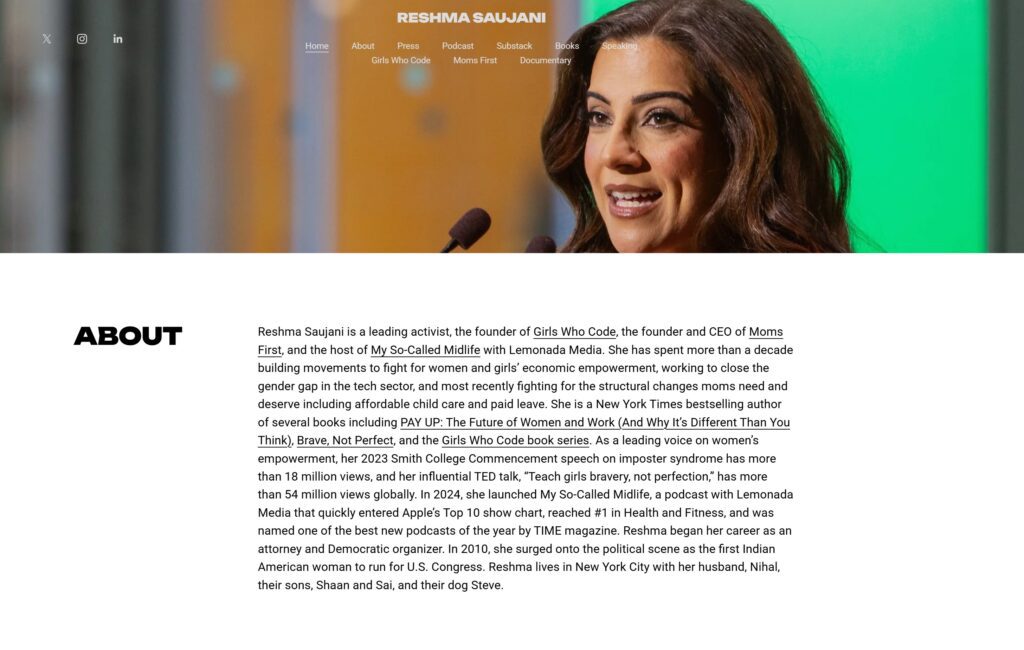
Reshma Saujani is the founder of Girls Who Code, and her personal website is a great example of brand clarity winning over flashy design. Her website is very straightforward (no crazy design elements) and clearly communicates who she is, what she is about, what she is working on, and how you can work with her.
She’s a high-profile founder and advocate, and her site reflects exactly that. No distractions. No clutter. Just a clear signal about her mission and her credibility.
The lesson? You don’t need to be impressive-looking to be impressive. Reshma’s brand works because her message is unmistakable.
What you can steal from Reshma:
- Lead with your mission, not just your title
- Remove anything from your site that doesn’t reinforce your core message
- Credibility comes from clarity, not complexity
See it live: reshmasaujani.com
3. Jamar Diggs — The Strategist Who Leads With Value
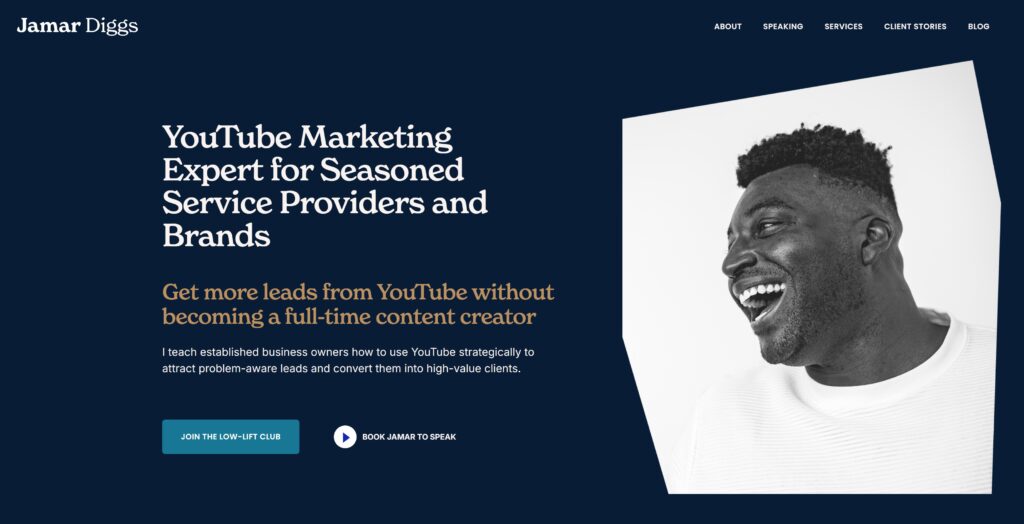
Jamar Diggs built a brand around YouTube and marketing strategy for service providers, and his site is a textbook example of how to turn expertise into inbound opportunity. His personal brand site is sharp, confident, and expertly designed to position him as a go-to strategist. It features a clear value proposition, credibility upfront with logos from Google, Podia, and HoneyBook, and a well-structured layout where each section has a clear purpose.
Notice how his site doesn’t just describe what he does — it builds a case for why you should hire him before you’ve even scrolled halfway down the page.
What you can steal from Jamar:
- Lead with a specific value proposition, not a vague job title
- Feature social proof prominently (past clients, media logos, testimonials)
- Give visitors a free resource so they experience your expertise before committing
Ready to build a site like Jamar’s? Browse Squarespace’s professional templates to find a starting point that fits your field. Squarespace makes it easy to build something polished without hiring a designer.
See it live: jamardiggs.com
4. Hannah Silverton — Subtle Branding That Builds Trust
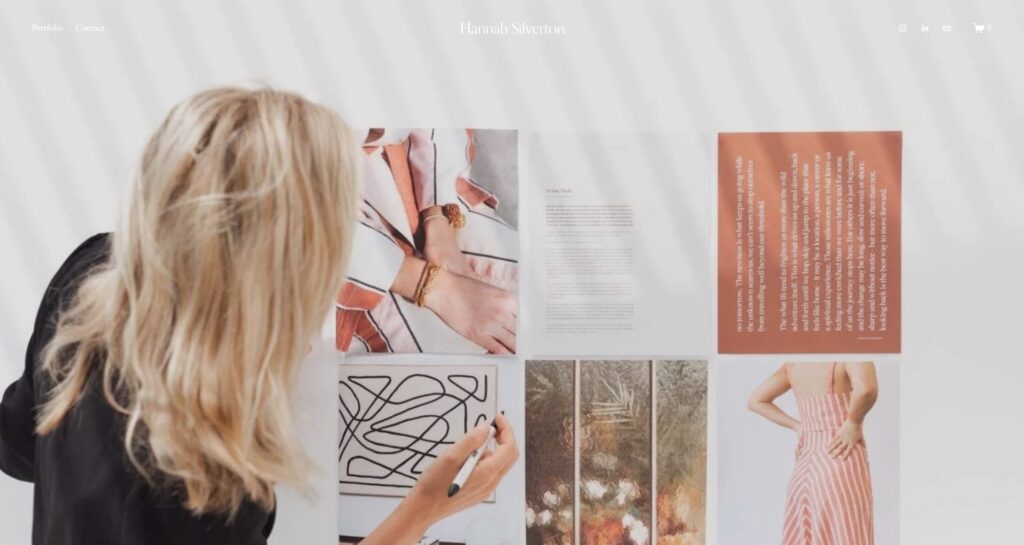
As a brand consultant and copywriter, Hannah Silverton could have built a loud, attention-grabbing site. She did the opposite. Muted tones and refined serif typefaces lay the foundation of her brand, while the photography choices throughout all carry a cohesive look and feel. For any potential client, this certainly builds trust and credibility in her work.
This is a powerful lesson for anyone in a professional services role. In fields like consulting, law, finance, or HR, a loud personal brand can feel off-putting. Restrained, polished, and cohesive sends exactly the right signal.
What you can steal from Hannah:
- Match your brand’s visual register to your industry’s expectations
- Cohesive photography is one of the most underrated brand-builders
- Trust can be communicated visually without a single word
See it live: hannahsilverton.com
5. Perry Wang — The Case Study Approach
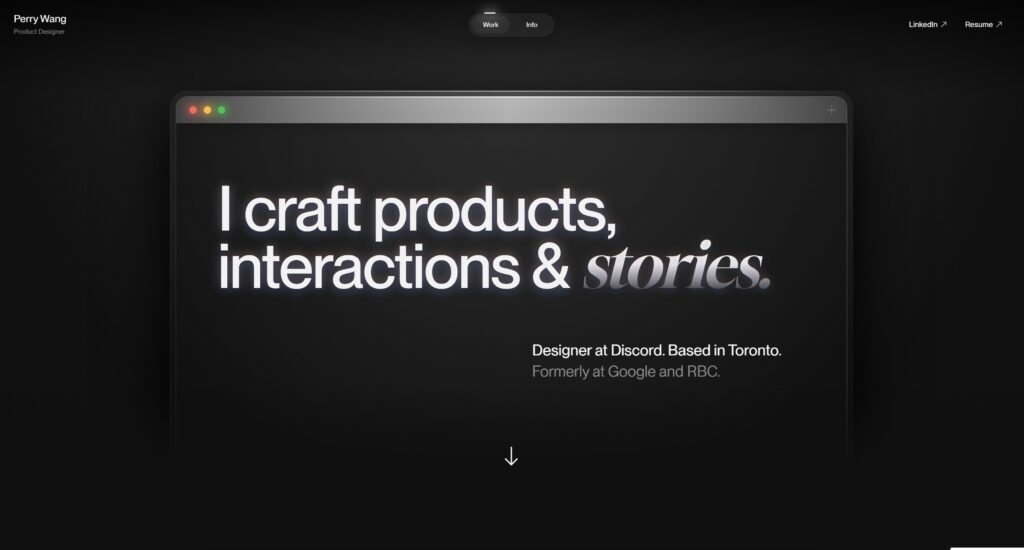
Toronto-based product designer Perry Wang built a portfolio that goes beyond showing screenshots. Each project includes his role, problem-solving approach, and key learnings, supported by design iterations and visuals. As you navigate through his site, Wang highlights his professional journey and passion for his craft, accompanied by personal photos that help readers better understand who he is.
This approach works in virtually any field. Whether you’re a marketer, engineer, project manager, or nurse, showing your process tells a hiring manager something a polished final result never can. It shows how you think.
What you can steal from Perry:
- Document your process, not just your output
- Include a “key learnings” section in your portfolio work
- Personal photos humanize a professional brand in a subtle, effective way
If you’re not sure what to put on your site, check out our guide to portfolio website examples for inspiration across different career fields.
Interview Guys Tip: Not a designer? No problem. You can write case studies about projects you’ve led, problems you’ve solved, or initiatives you’ve driven. Even a Google Doc with the right structure can tell a compelling professional story until you have a dedicated site.
See it live: Perry Wang’s portfolio
6. Kelsey — The Copywriter Who Practiced What She Preached
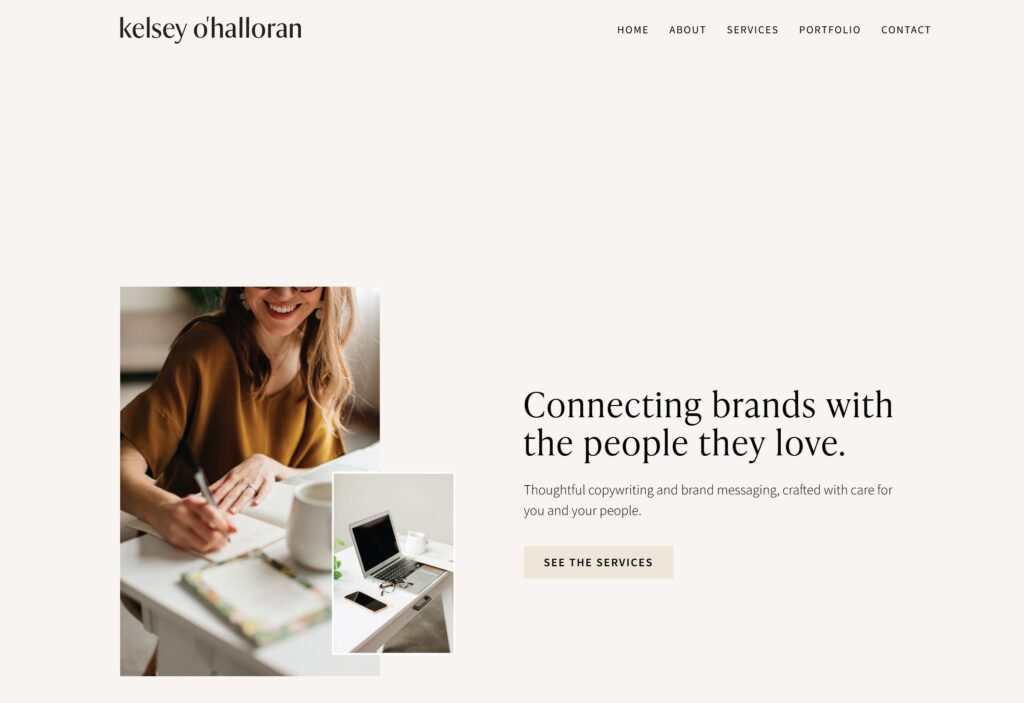
There’s a specific kind of personal brand credibility that only comes from consistency: when every element of your site reinforces your expertise. Kelsey, a copy and brand messaging consultant, nailed this. Her site features professionally shot photographs, well-written heading and subheading copy (highest priority for a copywriter!), a short services section with CTAs, and testimonials that are on brand with her style of work.
The headline copy on her homepage is itself a demonstration of her skill. She’s not just saying she writes great copy. She’s showing you, right there, on the page.
What you can steal from Kelsey:
- Every word on your site should demonstrate your professional standard
- Testimonials are brand assets — use them strategically, not as an afterthought
- Your “About” page is your most-read page after your homepage. Write it well.
See it live: Kelsey’s featured portfolio
7. Justin Welsh — The Solopreneur Who Built in Public
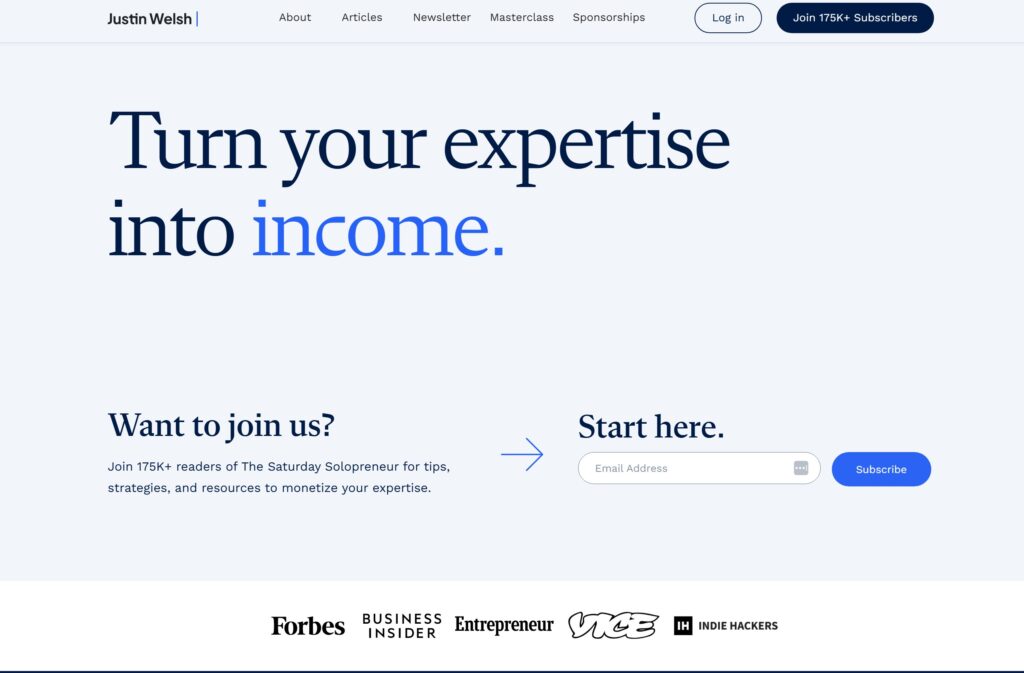
Justin Welsh grew from a corporate SaaS executive to one of the most recognized solopreneurs on LinkedIn by doing something most professionals still resist: showing his work in real time. Justin Welsh is a solopreneur with a significant following on social media who emphasizes the importance of content repurposing and publishing workflows to maintain consistency and grow a personal brand.
His consistency is the brand. He posts regularly, shares his systems, and documents his progress. That ongoing visibility is what keeps him top-of-mind with the right audience.
What you can steal from Justin:
- Consistency beats perfection every single time
- Share your thinking, not just your finished products
- Content repurposing means one idea can show up on LinkedIn, your newsletter, and your site
For professionals trying to stand out in a crowded field, our article on building your personal brand on LinkedIn in 30 days breaks down a practical content strategy you can start today.
See it live: justinwelsh.me
8. Mindy Nguyen — Personality as a Brand Asset
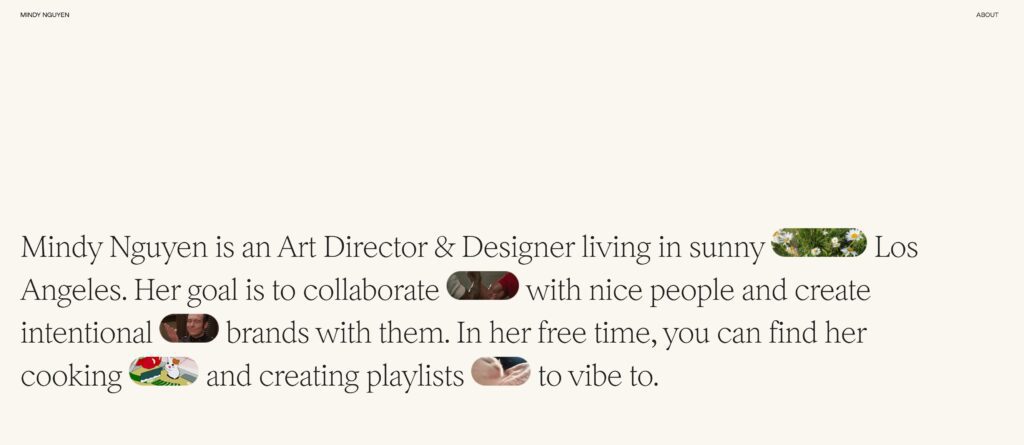
Visual artist and designer Mindy Nguyen built a site that makes an immediate emotional impression. She effectively showcases her fun personality with the use of GIFs and by mentioning what she does in her free time. She achieves the website’s goal of showcasing her work and professional self by mentioning it in the bio and displaying the best portfolio items on the homepage.
What makes Mindy’s brand memorable isn’t just her design work. It’s that you get a clear sense of who she is as a person almost instantly. That combination of personality and professionalism is increasingly rare, and increasingly valuable.
What you can steal from Mindy:
- Don’t sterilize your personality out of your professional brand
- What you do in your free time can be a legitimate brand asset if it’s relevant
- Show your best work on the homepage. Don’t make people dig for it.
Interview Guys Tip: Hiring managers are human. They want to work with people they’d enjoy having around. A professional brand that shows personality alongside competence will always outperform one that’s pure credentials. Think about what makes you genuinely interesting to work with, and let that show.
See it live: mindynguyen.me
9. Charli Marie — The Niche That Compounded
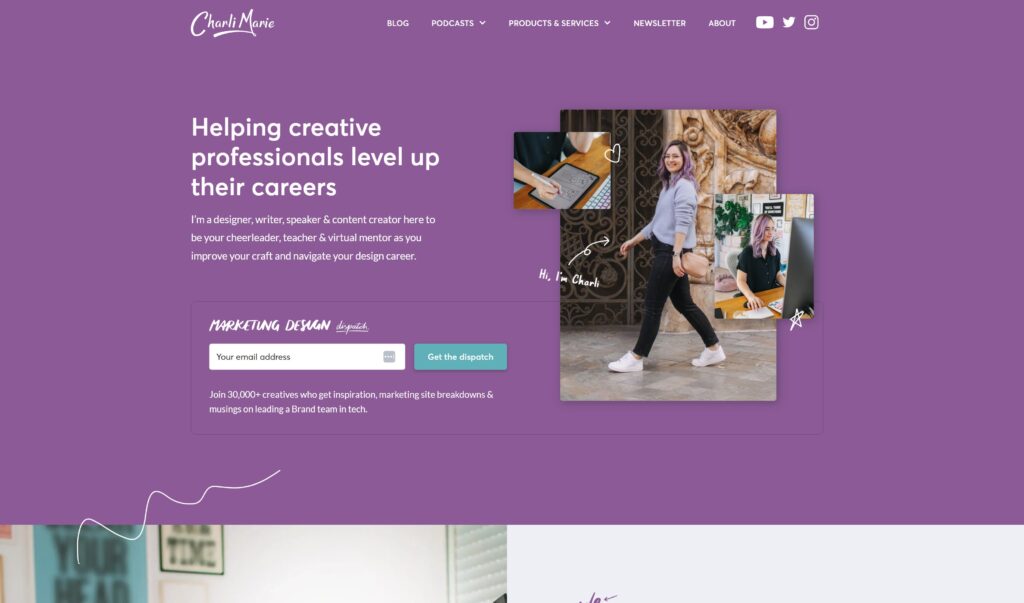
Charli Marie is a designer and YouTuber who focused relentlessly on a specific niche: design, freelancing, and creative careers. Charli’s personal brand is super recognizable thanks to her signature purple color and dark teal accents. She combines that with casual but good quality photos and hand-drawn doodles. Her tone is friendly and simple, and she seems to express her personality through her content and visuals.
The big lesson from Charli is that niche focus compounds over time. By consistently showing up for a specific audience with a specific message, she built a following that keeps growing.
What you can steal from Charli:
- Pick a signature visual element and stick with it (color, font, style)
- A narrow niche builds a deeper audience than trying to appeal to everyone
- YouTube or LinkedIn content creation can be a career accelerant, not a distraction
For step-by-step guidance on building a site with this kind of visual cohesion, our full guide on how to make a portfolio website that gets you hired walks through everything from choosing a platform to writing your About page.
See it live: charlimarie.com
10. Robin Noguier — The Tagline That Says Everything
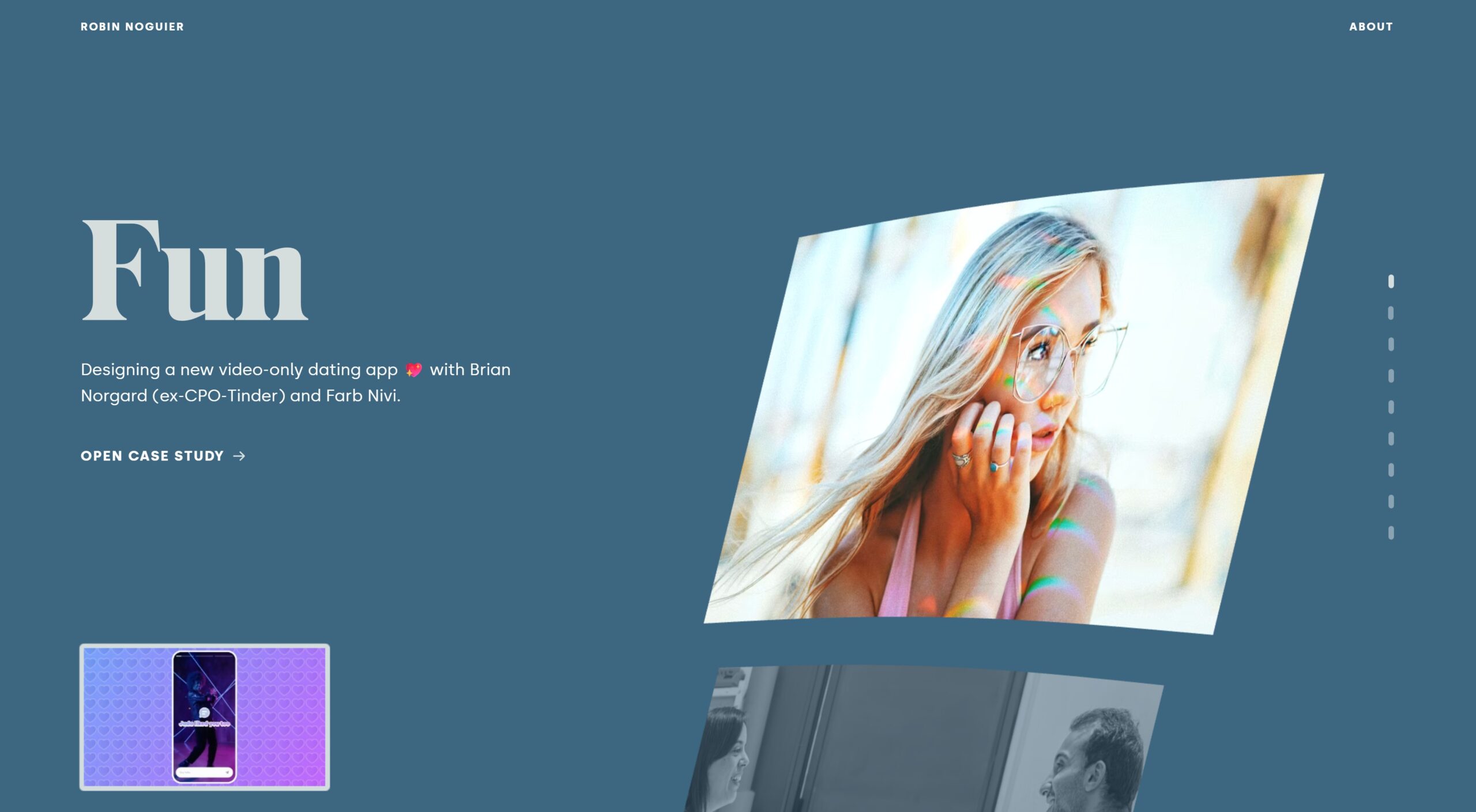
French interactive designer Robin Noguier built a personal brand with a single tagline that did more than most people’s entire websites. His captivating tagline, “The designer you didn’t know you needed… until today,” immediately establishes his confident yet approachable brand voice. His approach to design stems from a philosophy of continuous learning and hands-on experience, and the site has earned recognition for its beautiful design and seamless user journey.
Beyond the cleverness of the tagline, the real lesson is intentionality. Every word on his site is doing work. Nothing is filler. That kind of editorial discipline in a personal brand is rare and makes a strong impression.
What you can steal from Robin:
- Spend real time on your tagline. It’s the first thing people read.
- Every sentence on your site should earn its place
- Confident, specific language builds more trust than humble, hedged language
See it live: robinnoguier.com
The Common Thread Across All 10
Looking at these professionals side by side, a clear pattern emerges.
None of them built their brand overnight. None of them hired an expensive agency or had a perfect strategy from day one. What they did have was intentionality about how they showed up online.
Building trust and credibility is at the core of personal branding. When potential employers or collaborators can see your thought leadership in action — through insightful LinkedIn posts, a compelling personal blog, or engaging talks — they begin to trust your expertise before they’ve even met you.
That pre-established trust is what turns cold applications into warm conversations. It’s why inbound opportunities feel so different from the traditional job search grind.
How to Start Building Your Own Personal Brand
You don’t need a perfect brand. You need a starting point. Here’s what to focus on first:
- Step 1: Define your niche What do you do, who do you do it for, and what makes your approach different? A sharp answer to those three questions is the foundation of everything else.
- Step 2: Audit your current presence Google yourself. What comes up? Is it professional? Does it tell the story you want to tell? Around one in five recruiters has rejected a candidate after looking them up on social media and finding less-than-desirable information. Your digital footprint matters.
- Step 3: Build a home base A personal website is the only online real estate you fully own. Social platforms change their algorithms, penalize reach, and occasionally disappear entirely. Your website doesn’t. It’s the one place where you control everything from the copy to the design to the call to action.
For professionals who want a polished, professional site without a steep learning curve, Squarespace is our top recommendation. Their templates are purpose-built for professional portfolios, and you can get a free trial without even entering a credit card.
- Step 4: Create consistent content You don’t need to post daily. You need to post regularly and on-brand. One thoughtful LinkedIn article per week, one updated portfolio project per month, one email newsletter per quarter — these small commitments compound over time.
- Step 5: Let your resume and your brand tell the same story Your resume shouldn’t exist in isolation from your personal brand. The same core narrative, key strengths, and professional positioning should show up across your LinkedIn, your website, and your resume. For help with the resume side of this equation, check out our piece on resume formats that will dominate 2026.
What to Include on Your Personal Brand Website
Not sure what to put on your site? Here’s what the best personal brand sites have in common:
- A clear headline that states who you are and what you offer in one sentence
- An About section that tells your professional story with personality
- Work samples or case studies that show your process, not just your results
- Testimonials or social proof from past employers, clients, or colleagues
- A professional photo — this one matters more than most people think
- A simple contact form or CTA so the right people can reach you easily
- Links to your LinkedIn and any relevant content you’ve created
For more ideas on what a personal brand site can look like, browse our collection of 25 personal website ideas across different industries and career stages.
Interview Guys Tip: Your personal brand website doesn’t need to be a full portfolio. For some people, a clean one-page site with a strong bio, a few testimonials, and a contact form is all it takes to make a memorable impression. Start simple. You can always expand.
Choosing the Right Platform to Build Your Brand Site
The best platform is the one you’ll actually use. That said, after working with thousands of job seekers and career professionals, we consistently recommend Squarespace for personal brand websites.
Here’s why it works for career-focused professionals:
- Templates designed for portfolios and personal brands — not generic business sites
- No coding required — you can launch a professional site in a weekend
- Mobile-optimized by default — critical when recruiters are viewing on their phones
- Built-in blogging and SEO tools — for professionals who want to create content
- Custom domain support — so your brand lives at YourName.com, not a generic URL
You can start a free trial with no credit card required and browse their full portfolio template library at the Squarespace template page to find a design that fits your field.
Your Brand Is Already Being Built. The Question Is Whether You’re Doing It on Purpose.
Every time a hiring manager Googles you, they find something. Every time a recruiter clicks on your LinkedIn, they form an impression. Every time a potential contact looks you up before a networking coffee, they come to a conclusion.
At its core, personal branding is about consistency, credibility, and confidence. It’s not about being flashy — it’s about being clear about your value and intentional about how you show up.
The professionals in this article didn’t build famous brands. They built intentional ones. That’s what made the difference.
Your brand doesn’t have to be perfect. It just has to be yours.
Here’s what most people don’t realize: employers now Google you before they interview you. Having just a resume and LinkedIn isn’t enough anymore. Having a professional website proves you can do the work, not just claim it.…
Your Resume Says You Have Skills. Your Website Proves It…
We recommend Squarespace because it lets you build a professional portfolio website in one weekend with zero coding skills. Showcase your work, host your portfolio, and give employers a reason to choose you over the 200+ other applicants. Free trial to start, and templates designed specifically for job seekers…

BY THE INTERVIEW GUYS (JEFF GILLIS & MIKE SIMPSON)
Mike Simpson: The authoritative voice on job interviews and careers, providing practical advice to job seekers around the world for over 12 years.
Jeff Gillis: The technical expert behind The Interview Guys, developing innovative tools and conducting deep research on hiring trends and the job market as a whole.