
Flight Attendant Resume Template: Examples & Writing Guide [2025]

Landing a flight attendant job means your resume needs to do one thing really well: convince airlines you can keep passengers safe while delivering exceptional service at 35,000 feet. That’s a tall order when you’re competing against hundreds of other candidates for every opening.
The Bureau of Labor Statistics projects 9% employment growth for flight attendants through 2034, with approximately 19,800 openings annually U.S. Bureau of Labor Statistics. That’s great news for job seekers, but here’s the catch. Airlines receive thousands of applications for each hiring class, and most resumes get filtered out by Applicant Tracking Systems (ATS) before a human ever sees them.
Your resume needs to pass the ATS scan AND impress the hiring manager within seconds. We’re talking about a document that showcases your customer service skills, safety training, cultural sensitivity, and ability to stay calm in emergencies. All while fitting on one page and using the right keywords.
Sound overwhelming? It doesn’t have to be.
In this guide, we’ll walk you through creating a flight attendant resume that actually gets interviews. You’ll see exactly what airlines look for, which sections to include, and how to present your experience in a way that stands out. Plus, we’ll give you a free downloadable template you can customize for your own applications.
By the end of this article, you’ll have a clear roadmap for building a resume that positions you as the safety-conscious, service-oriented professional airlines can’t wait to hire. Whether you’re applying to your first flight attendant role or moving to a new carrier, this guide has you covered. For more tips on the entire job search process, make sure to check out our comprehensive career resources.
☑️ Key Takeaways
- Flight attendant roles are in high demand with employment projected to grow 9% through 2034, creating nearly 19,800 annual job openings
- Safety expertise matters more than service skills on your resume since airlines prioritize candidates who demonstrate emergency response capabilities
- Bilingual candidates have a competitive advantage, especially those fluent in Spanish, French, Korean, or other high-demand languages
- Quantifying your achievements with metrics like passenger satisfaction scores and flight volumes makes your resume stand out to hiring managers
What Makes a Flight Attendant Resume Different?
Flight attendant resumes aren’t like typical customer service resumes. Sure, you need to show you’re friendly and professional. But airlines care about something else first: can you handle emergencies?
Your resume needs to balance two priorities. First, demonstrate you can maintain cabin safety and respond to medical emergencies, turbulence, unruly passengers, and evacuation situations. Second, show you deliver exceptional hospitality that makes passengers want to fly with that airline again.
Most flight attendant resumes fail because they focus too heavily on customer service and forget to emphasize safety credentials. Airlines need people who smile AND know exactly what to do when someone has a heart attack mid-flight.
The best flight attendant resumes also highlight cultural competence and language skills. You’ll work with passengers and crew members from dozens of countries. If you’re bilingual or have international experience, that’s gold for your application.
Interview Guys Tip: Airlines look for candidates with 1-2 years of customer service experience before their first flight attendant role Zippia. If you’re coming from hospitality, hotels, restaurants, or retail, make sure those connections are crystal clear on your resume. Don’t make the recruiter guess how your Starbucks barista experience prepared you for serving passengers at 30,000 feet.
Before you send that resume: most Flight Attendant resumes get filtered out by ATS before a human ever sees them. Upload yours and find out your score. It takes 60 seconds and it’s free.
Flight Attendant Resume Template
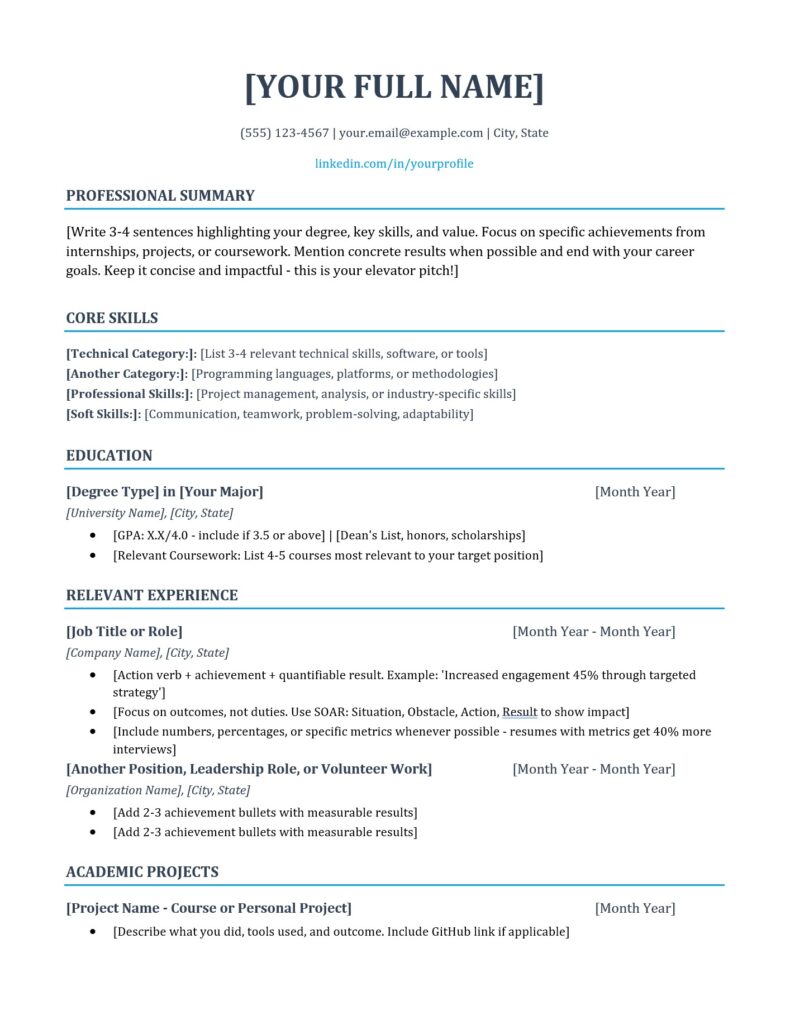
Download Your Template:
Essential Components of Your Flight Attendant Resume
Your flight attendant resume needs these six core sections in this order: professional summary, work experience, education, skills, and certifications. Some candidates also benefit from adding a languages section if they’re multilingual.
Let’s break down what belongs in each section and why it matters to airlines.
Professional Summary
Start with a 3-4 line summary that positions you as a safety-focused professional with strong service skills. This isn’t the place for generic fluff about being a “team player” or “hard worker.”
Your summary should mention your years of experience, key qualifications (like FAA certification or bilingual abilities), and your core strengths. Think of it as your elevator pitch to the hiring manager.
For example: “Dedicated and safety-focused Flight Attendant with 5+ years of experience delivering exceptional in-flight service across domestic and international routes. Proven ability to maintain composure during emergencies, resolve passenger concerns effectively, and collaborate with diverse cabin crews. Fluent in English and Spanish with FAA certification and extensive safety training.”
Work Experience
This is where you prove you can do the job. List your relevant positions in reverse chronological order, starting with your most recent role.
For each position, include the job title, company name, location, and dates of employment. Then add 3-5 bullet points that describe your accomplishments and responsibilities.
Here’s the secret: frame everything around results and metrics when possible. Instead of “Served passengers on flights,” try “Ensured passenger safety and comfort on 150+ flights annually across domestic and international routes, consistently maintaining 98% customer satisfaction ratings.”
Airlines specifically look for candidates who can demonstrate physical stamina since flight attendants must push, pull, and carry service items, open overhead bins, lift heavy objects, and stand for long periods U.S. Bureau of Labor Statistics. Don’t be afraid to mention the physical demands you’ve handled successfully.
If you don’t have flight attendant experience yet, focus on roles in hospitality, customer service, hotels, or restaurants. Emphasize situations where you handled difficult customers, worked under pressure, or ensured safety compliance. Looking for more guidance on describing your work experience?
Interview Guys Tip: Use the SOAR method (Situation, Obstacle, Action, Result) to craft your bullet points. This storytelling approach helps hiring managers see exactly how you add value. For example: “Managed in-flight service delivery for up to 180 passengers (Situation), coordinating with crew members to overcome service delays (Obstacle) by implementing efficient distribution strategies (Action), resulting in premium hospitality experience and zero service complaints (Result).”
Education
Airlines typically require a high school diploma at minimum, though many prefer candidates with some college education or degrees in hospitality, tourism, or related fields. List your education in reverse chronological order with degree name, school, location, and graduation date.
If you attended a flight attendant academy or completed specialized aviation training, include that here too. These programs demonstrate your serious commitment to the career.
Research shows that 61% of airline flight attendants hold bachelor’s degrees, with those credentials associated with higher starting salaries Zippia. If you have a degree, make sure it’s prominent on your resume.
Skills
Create a skills section that balances hard skills (technical abilities) with soft skills (interpersonal traits). Airlines use ATS software that scans for specific keywords, so including the right terms is crucial.
Essential hard skills include: FAA regulations, emergency procedures, first aid and CPR, evacuation protocols, safety equipment operation, crew resource management, and in-flight systems.
Key soft skills include: conflict resolution, passenger relations, cultural sensitivity, problem-solving, communication, teamwork, and stress management.
Organize your skills into categories for easy scanning. For example, group safety and compliance skills separately from customer service abilities. Want to learn more about showcasing your professional skills?
Certifications
Airlines require specific certifications, so create a dedicated section for these credentials. At minimum, you’ll need FAA Flight Attendant Certificate of Demonstrated Proficiency once you complete airline training.
List any current certifications like CPR and First Aid (specify the certifying organization), IATA Dangerous Goods Regulation Training, or specialized safety certifications. Include the certification name, issuing organization, and date earned or expiration date.
If your CPR certification expired recently, get it renewed before applying. This shows initiative and makes you job-ready from day one.
Languages
If you speak multiple languages, create a separate languages section. Spanish is the most common second language among flight attendants (45.1%), followed by French (13.6%) Zippia. Being bilingual significantly boosts your chances of getting hired, especially at international carriers.
List each language and your proficiency level (conversational, fluent, or native). Don’t exaggerate your abilities since you may be tested during the interview process.
How to Optimize Your Flight Attendant Resume for ATS
Applicant Tracking Systems scan your resume for keywords before any human sees it. If your resume doesn’t include the right terms, it gets automatically rejected even if you’re qualified.
The solution is simple: mirror the language from the job description. If the airline lists “passenger safety” as a requirement, use that exact phrase rather than “customer security” or “traveler protection.”
Common ATS keywords for flight attendant resumes include: passenger safety, customer service, emergency procedures, FAA regulations, conflict resolution, safety demonstrations, cabin service, food and beverage service, safety compliance, evacuation protocols, and first aid.
But here’s the critical part: don’t just stuff keywords into your resume. Use them naturally within the context of your actual experience. ATS software is smart enough to detect keyword cramming, and recruiters will definitely notice if your resume reads like a robot wrote it.
Place keywords in multiple sections. Include them in your professional summary, work experience bullet points, and skills section. This increases your chances of passing the ATS threshold while keeping your resume readable.
Interview Guys Tip: Save your resume as a .docx file rather than a PDF when submitting online applications. While PDFs look more professional, some older ATS systems struggle to parse PDF formatting. A Word document ensures the system can read your content properly. Once you reach the interview stage, you can bring a PDF copy to hand to interviewers. Need help with your overall job application strategy?
Common Flight Attendant Resume Mistakes to Avoid
Even experienced candidates make mistakes that cost them interviews. Avoid these common pitfalls:
- Focusing only on service, not safety. Your resume should emphasize safety first, service second. Airlines need people who can evacuate a plane if needed, not just serve drinks with a smile.
- Using generic descriptions. Phrases like “provided excellent customer service” tell recruiters nothing. Be specific about what you did and the results you achieved.
- Forgetting to quantify achievements. Numbers make your accomplishments real. How many flights did you work? What was your customer satisfaction score? How many passengers did you serve? Metrics matter.
- Listing irrelevant experience. That summer job at the ice cream shop in high school doesn’t belong on your resume if you have relevant hospitality or customer service experience to showcase instead. Keep it focused.
- Ignoring soft skills. Technical skills get you past the ATS, but soft skills get you hired. Demonstrate your emotional intelligence, cultural awareness, and ability to stay calm under pressure.
- Making it longer than one page. Flight attendant resumes should fit on a single page. If you can’t condense your experience to one page, you’re including too much detail or irrelevant information.
- Using unprofessional email addresses. Your email should be some variation of your name, not “partygirl2024” or “flyforfree.” Create a professional email address specifically for your job search if needed.
Frequently Asked Questions
Do I need flight attendant experience to apply?
No. Airlines hire candidates with no flight attendant experience all the time. What they require is 1-2 years of customer service experience in roles like restaurants, hotels, retail, or other hospitality positions. You’ll receive all your flight attendant training from the airline after you’re hired.
How important are certifications on my resume?
Very important. While you don’t need FAA certification before applying (airlines provide that training), having current CPR and First Aid certifications shows you’re serious about safety and ready to start training immediately. These certifications should be prominently featured in their own section.
Should I include a photo on my flight attendant resume?
No. In the United States, including photos on resumes is discouraged and can actually work against you. Airlines want to evaluate your qualifications, not your appearance. Save the professional presentation for the interview itself.
What’s the best format for a flight attendant resume?
Use a reverse chronological format that lists your most recent experience first. This format works best because it clearly shows your career progression and makes it easy for both ATS systems and hiring managers to scan your background quickly.
How do I describe customer service experience for a flight attendant role?
Focus on situations where you handled difficult customers, worked in fast-paced environments, maintained safety standards, worked as part of a team, and delivered service under pressure. These are exactly the skills airlines look for, even if your experience comes from restaurants or hotels rather than aviation.
Putting It All Together
Creating a strong flight attendant resume isn’t about fancy formatting or creative design. It’s about clearly demonstrating you have the safety expertise, customer service skills, and professional attitude airlines need.
Start with a compelling summary that positions you as a safety-first professional. Build your work experience section around quantifiable achievements that show your impact. Highlight relevant education and certifications that prove your qualifications. Include a well-organized skills section packed with the right keywords. And if you’re bilingual, make sure that advantage is front and center.
Remember that your resume’s job is to get you the interview, not the job itself. Keep it focused, professional, and results-oriented. Use our free downloadable template as your starting point, then customize it to reflect your unique experience and the specific airline you’re targeting.
The flight attendant career path offers incredible opportunities for travel, competitive salaries (with median annual wages of $67,130 and top earners making over $138,040 U.S. Bureau of Labor Statistics), and the chance to meet people from around the world. Your resume is your ticket to that exciting career, so invest the time to make it exceptional.
Ready to take the next step? Download our flight attendant resume template below and start customizing it for your next application today.
Before you send that resume: most Flight Attendant resumes get filtered out by ATS before a human ever sees them. Upload yours and find out your score. It takes 60 seconds and it’s free.
Advice like this is the general version. Longbow scores your actual resume against the actual job you want and shows you what's missing, before the filters decide for you. Here's why we built it.

ABOUT THE INTERVIEW GUYS (JEFF GILLIS & MIKE SIMPSON)
Mike Simpson: Co-founder of The Interview Guys and Longbow. He has been the voice behind our interview advice since 2013 — his work has reached over 100 million job seekers around the world. The strategic mind behind Longbow, our new career platform.
Jeff Gillis: Co-founder of The Interview Guys and Longbow. He built the systems that put our work in front of those readers, and he leads the engineering on Longbow, the cutting edge career platform built for today’s job seeker.