
25 Personal Website Ideas That’ll Make You Stand Out in 2026

Your LinkedIn profile looks like everyone else’s. Your resume gets lost in applicant tracking systems. And your Instagram bio gives you exactly 150 characters to explain who you are and what you do.
That’s not enough space to stand out.
A personal website gives you something different. It’s your own corner of the internet where you control the narrative, showcase your work without character limits, and create an impression that sticks with people long after they click away.
The best part? You don’t need coding skills or a massive budget to build something impressive. Modern website builders like Squarespace handle all the technical details while you focus on showcasing what makes you worth paying attention to.
Whether you’re job hunting, building a side business, or just want to claim your name online before someone else does, the right personal website idea can open doors you didn’t even know existed. Let’s explore 25 different approaches that work in 2026, complete with real examples you can study and adapt.
☑️ Key Takeaways
- Personal websites give you full control over your professional narrative in a way social media platforms never can, making you 71% more likely to be perceived as an industry expert.
- • The best personal website matches your primary goal (job hunting, client acquisition, or community building) rather than trying to serve every possible purpose at once.
- • Launch a simple version quickly using professional templates instead of waiting months for perfection, since most successful sites evolved based on real user feedback.
- • Focus on mobile optimization and clear calls-to-action because over 60% of traffic comes from phones and every extra click loses half your potential contacts.
Disclosure: This article contains affiliate links. If you purchase through these links, we may earn a commission at no additional cost to you.
Why Your Personal Website Matters More Than Ever
Before we dive into specific ideas, let’s address the obvious question: do you actually need a personal website when LinkedIn, Twitter, and Instagram already exist?
The short answer is yes. Social platforms are rented space. They control the algorithm, change the rules, and can suspend your account for reasons you might never understand. A personal website is property you own.
According to research on personal branding, professionals with personal websites are 71% more likely to be perceived as industry experts compared to those who rely solely on social media profiles. When someone Googles your name, you want them to find something you created, not just your social media profiles or what others have said about you.
Building a portfolio website has become essential for career advancement, but the concept extends far beyond traditional portfolios. Your personal website can serve dozens of different purposes depending on what you’re trying to accomplish.
Here’s what most people don’t realize: employers now Google you before they interview you. Having just a resume and LinkedIn isn’t enough anymore. Having a professional website proves you can do the work, not just claim it.…
Your Resume Says You Have Skills. Your Website Proves It…
We recommend Squarespace because it lets you build a professional portfolio website in one weekend with zero coding skills. Showcase your work, host your portfolio, and give employers a reason to choose you over the 200+ other applicants. Free trial to start, and templates designed specifically for job seekers…
Career-Focused Personal Website Ideas
1. Professional Portfolio Site
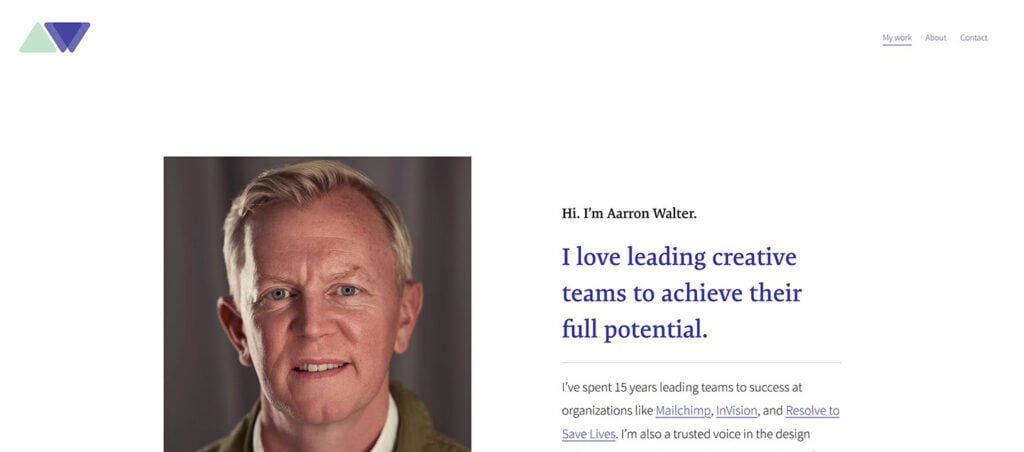
The classic approach that never goes out of style. Showcase 3 to 5 of your best projects with context about the problems you solved and the results you achieved. Aarron Walter’s site demonstrates this perfectly. As the former Director of UX at Mailchimp and VP of Design Education at InVision, his portfolio leads with clear project descriptions and obvious CTAs. Each case study includes his role in the project, the process, and measurable results, ending with testimonials from peers.
What makes it work: simple yet effective design that lets the work speak for itself while demonstrating expertise through well-organized case studies and social proof.
2. Interactive Resume Website
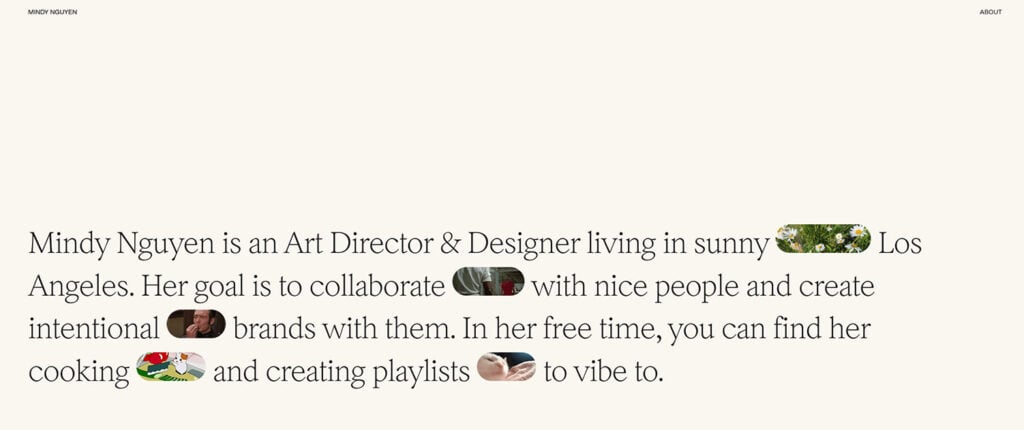
Transform your resume from a static PDF into an engaging digital experience. Mindy Nguyen’s site showcases how a Los Angeles-based visual artist and designer can use GIFs and personality-driven content to immediately communicate both professionalism and fun. She effectively achieves the dual goal of showcasing her work while revealing what she does in her free time, with her About page strategically placed in the visual hierarchy.
What makes it work: perfect design execution with attention to fonts, spacing, hierarchy, and photos that demonstrates expertise while building personal connection.
3. Digital Portfolio for Creatives
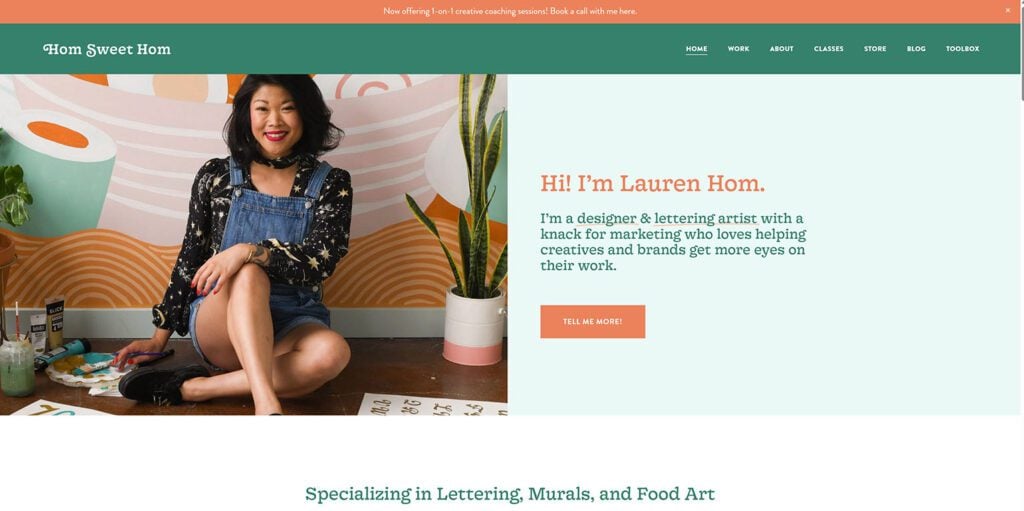
If you’re a designer, photographer, or visual artist, your website IS your portfolio. Lauren Hom’s site “Hom Sweet Hom” (nice twist on “Home Sweet Home”) showcases her work as a designer and lettering artist specializing in marketing, lettering, murals, and food art. She offers both a creative portfolio and online courses on topics like mural painting and marketing, plus a blog sharing professional advice and personal stories.
What makes it work: the website structure supports multiple revenue streams while maintaining a cohesive creative identity that attracts both clients and students.
4. Skill-Based Showcase
Rather than organizing by job history, structure your site around specific capabilities. This works especially well for career changers who want to emphasize transferable skills over chronological work experience. Think about the most valuable skills employers look for and build your site structure around demonstrating those.
What makes it work: focuses on what you can do, not just where you’ve worked, which helps hiring managers immediately understand your value.
5. Industry Expert Blog
Position yourself as a thought leader by teaching others what you know. Creating content that solves real problems builds authority faster than any resume ever could. According to Webflow’s guide on personal websites, educational content combined with case studies creates the strongest impression for technical professionals.
What makes it work: demonstrates deep expertise while providing genuine value to readers, which builds trust naturally and attracts opportunities.
Business and Entrepreneurship Website Ideas
6. Service Provider Landing Page
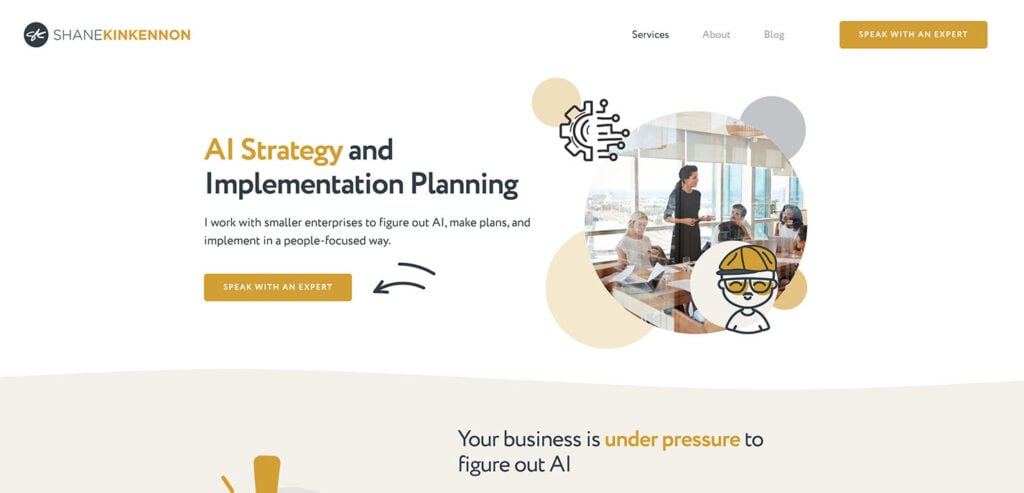
If you’re a consultant, coach, or freelancer, your website needs to make booking you dead simple. Shane Kinkennon’s site exemplifies this perfectly. He helps principled executive leaders untangle impediments through leadership advising services, and his site shows him in action teaching on a whiteboard. The first-person language throughout maintains a professional tone that oozes confidence, exactly what C-suite professionals expect from a coach. Browse service-focused templates to see layouts designed specifically for this purpose.
What makes it work: combines visual proof of expertise with testimonials from fellow C-suite executives that build immediate credibility.
7. Digital Product Storefront
Sell ebooks, templates, courses, or digital downloads directly from your site. E-commerce functionality that once required complex setups now comes built into most website platforms, making it easier than ever to monetize your expertise.
What makes it work: gives you complete control over pricing, customer data, and profit margins compared to marketplace platforms that take hefty cuts.
8. Newsletter Hub
Your newsletter deserves better than a generic Substack page. Create a custom home for your content where you control the design and own the subscriber relationship. Include archives, about pages, and easy subscription forms that match your brand aesthetic.
What makes it work: builds a branded experience around your writing that feels more substantial than generic newsletter platforms and increases perceived authority.
9. Booking and Appointment Site
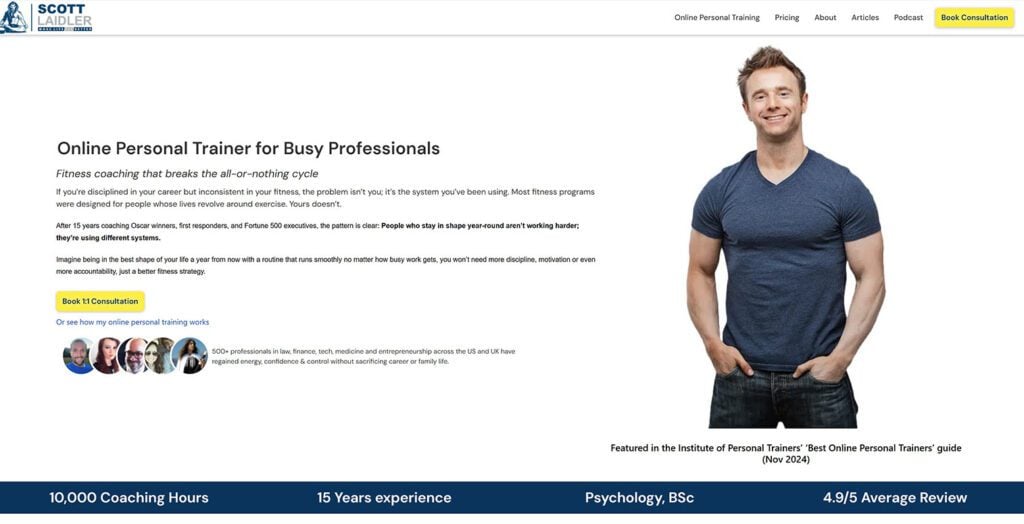
Perfect for tutors, personal trainers, therapists, or anyone who needs to manage appointments. Scott Laidler’s site demonstrates how a personal trainer can showcase credibility through transformation photos and media features. As someone who has trained Oscar-winning actors, athletes, and military personnel, his site includes logos of magazines he’s been featured in (Esquire, Men’s Health, Women’s Health), notable celebrity clients like Kate Hudson, video testimonials, and Google review embeds that build immediate trust.
What makes it work: professional presentation with overwhelming social proof that addresses every possible objection before a potential client even thinks of it.
10. Personal Brand Hub
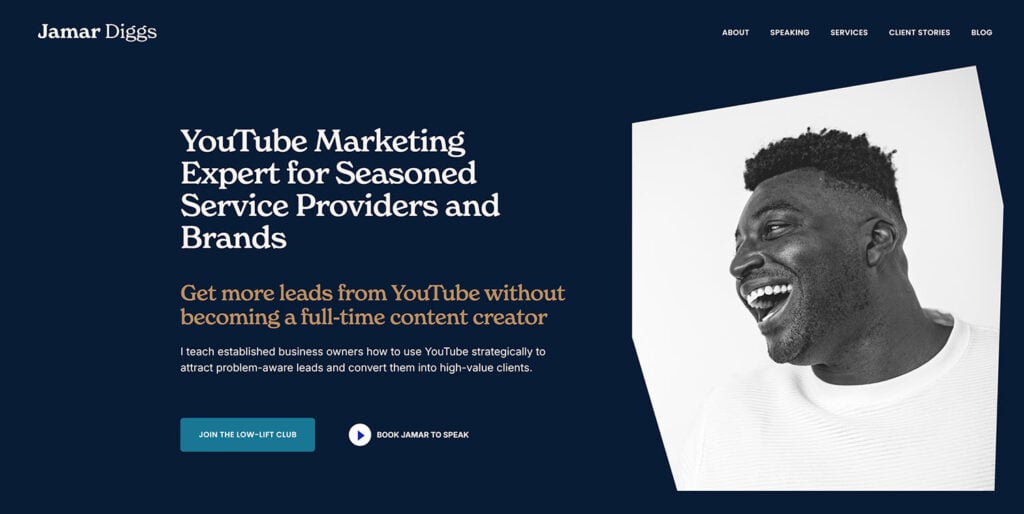
Jamar Diggs’ site demonstrates how YouTube and marketing strategists can position themselves as go-to experts. His sharp, confident design immediately tells you who it’s for (“YouTube and Marketing Strategy for Seasoned Service Providers and Brands”) while logos from Google, Podia, and HoneyBook build instant credibility. With free resources like a QuickStart guide, a “Low-Lift Club” membership, and live training sprints, the site caters to both first-timers and committed clients.
What makes it work: conversion-focused layout with multiple entry points that meet prospects wherever they are in the decision-making process.
Creative and Content-Focused Website Ideas
11. Photography Portfolio
Let your images do the talking. Focus on clean presentation that doesn’t compete with your work. Gallery layouts, full-screen images, and project-based organization work best. Professional photographers need their sites to showcase technical excellence while remaining fast-loading and mobile-friendly.
What makes it work: the website becomes a frame that enhances your images rather than distracting from them, letting your visual work speak for itself.
12. Writer’s Showcase
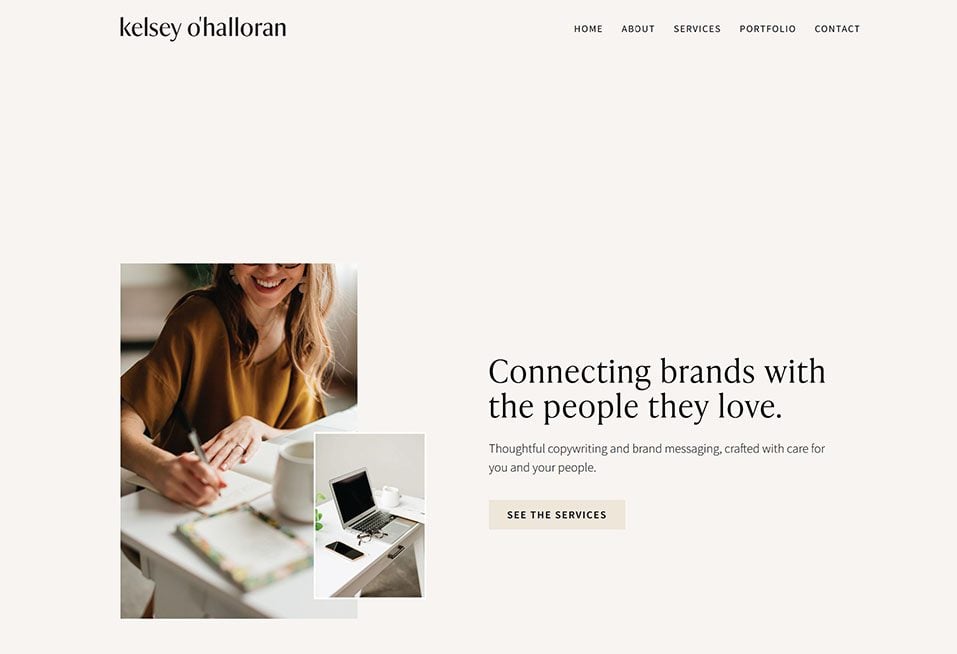
Display your published work, writing samples, and maybe a blog where you develop new ideas. Kelsey O’Halloran’s copywriting portfolio demonstrates how to pair each portfolio item with screenshots of where work is published, the client’s name, her role, and a testimonial. All testimonials describe her expertise: “Kelsey put words to my brand, services, and personality that I’ve never been able to articulate before” and “Kelsey asks concise questions that really make you think about your service or product in a whole new way.”
What makes it work: combines writing quality demonstration with social proof that addresses potential clients’ biggest concern (will this actually work for me?).
13. Video Content Creator Hub
Embed your best YouTube videos, showcase client work, or create a highlight reel of your filming projects. Make sure your site loads quickly despite the video content by using proper compression and lazy loading techniques.
What makes it work: gives brands and potential collaborators an easy way to review your work quality without requiring them to scroll through your entire YouTube channel.
14. Podcast Website
Give your podcast a professional home beyond Apple Podcasts and Spotify. Include episode players, show notes, guest bios, and sponsor information all in one place. Your podcast website becomes your media kit and pitch document rolled into one.
What makes it work: creates a destination for superfans while making it easy for new listeners to start with your best episodes and for brands to evaluate sponsorship opportunities.
15. Music and Performance Site
Musicians need websites that combine tour dates, music streaming links, merchandise, and mailing lists in one branded location. The key is making it effortless for casual listeners to become dedicated fans through clear calls to action and social proof.
What makes it work: converts casual listeners into dedicated fans by making it easy to stay updated and show support through multiple engagement channels.
Lifestyle and Personal Interest Website Ideas
16. Travel Documentation Site
Chronicle your adventures with photo galleries, travel tips, and destination guides. A travel site doesn’t need to be a business to be valuable. It can simply document your experiences and help others planning similar trips while building your personal brand as someone with interesting experiences.
What makes it work: authentic stories and practical advice beat generic travel content every time, creating loyal followers who trust your recommendations.
17. Recipe and Food Blog
Share your favorite recipes, cooking techniques, or restaurant reviews. Food photography combined with clear instructions creates content people return to repeatedly. According to WordPress’s guide on creating personal websites, food blogs remain one of the most popular personal website categories because they solve immediate, practical problems.
What makes it work: solves a real problem (what should I cook for dinner?) which builds a loyal returning audience and creates opportunities for affiliate partnerships.
18. Hobby Showcase Site
Whether you collect vintage synthesizers, restore furniture, or build model trains, a personal site lets you share your passion with others who care. You might even discover community or business opportunities you never expected when fellow enthusiasts find your work.
What makes it work: passion projects often attract like-minded people who become collaborators, customers, or friends, turning hobbies into opportunities.
19. Reading List and Book Reviews
Create a digital library of books you’ve read with your thoughts on each. Personal reading lists reveal your influences and personality through your recommendations, creating instant connection points with visitors who share your tastes.
What makes it work: book recommendations are inherently shareable and help people discover your intellectual interests quickly, building rapport with potential collaborators or employers.
20. Fitness Journey Documentation
Track your progress, share workout routines, or document a specific fitness goal. Before-and-after transformations make compelling content, but so does honest documentation of the process including setbacks and plateaus.
What makes it work: authenticity and consistency matter more than perfection when building an audience around fitness content, and vulnerability creates stronger connections.
Professional Development Website Ideas
21. Career Transition Story Site
If you’re making a major career change, documenting the journey serves multiple purposes. It demonstrates your commitment, builds your network in the new field, and creates accountability. Check out these career change strategies for more context on pivoting successfully.
What makes it work: transparency about the challenges makes your eventual success more credible and relatable, attracting opportunities from people who appreciate your journey.
22. Skills Learning Hub
As you develop new capabilities, create tutorials and resources that teach others. This reinforces your own learning while building a reputation as someone who understands the topic deeply enough to explain it clearly.
What makes it work: teaching forces you to understand concepts at a deeper level, and the content becomes proof of your expertise that works for you 24/7.
23. Industry Research and Insights
Analyze trends, share data, and provide commentary on developments in your field. Original analysis positions you as a thinker, not just a doer, which opens doors to speaking opportunities and thought leadership roles.
What makes it work: synthesizing information from multiple sources and adding your unique perspective creates value that can’t be found elsewhere.
24. Now Page
Inspired by Derek Sivers’ nownownow.com movement, a “now page” tells visitors what you’re focused on right now. It’s simpler than a blog but more personal than a static about page. Update it monthly to keep it relevant and give people an authentic window into your current priorities.
What makes it work: gives people a quick, authentic snapshot of your current priorities without requiring them to scroll through months of content or social media posts.
25. Digital Business Card
Sometimes simple wins. A single-page site with your photo, brief bio, contact information, and links to your social profiles accomplishes more than you’d think. Simple one-page examples often convert better than complex sites because they reduce decision paralysis and make the next step obvious.
What makes it work: eliminates friction between meeting someone and them finding a way to contact you later, which is often the difference between a connection and a lost opportunity.
How to Choose the Right Idea for Your Personal Website
With 25 options, you might feel overwhelmed. Here’s how to narrow it down:
- Start with your primary goal. Are you job hunting? Building a client base? Documenting a hobby? Your website’s purpose determines everything else about its structure and content. Be specific about what success looks like.
- Consider your audience. Who needs to see this? Hiring managers have different needs than potential clients, who have different needs than fellow hobbyists. Design for the people you most want to reach, not everyone at once.
- Evaluate your content. What do you already have to show? If you have strong visual work, lead with that. If your writing is your strength, make that the centerpiece. Build around your existing assets rather than creating everything from scratch.
- Think about maintenance. How much time can you realistically invest in updates? A blog requires regular content. A portfolio needs periodic refreshes. A digital business card might only need updates when you change jobs. Be honest about what you’ll actually maintain, because an outdated site is worse than no site at all.
- Test before committing. Most platforms offer free trials. Start exploring Squarespace templates to see what resonates visually before you commit to a specific approach. Sometimes you won’t know what works until you see it.
Making Your Personal Website Actually Happen
The biggest obstacle isn’t technical skill or budget. It’s perfectionism. You’ll wait months trying to make your site perfect before launching, which means you get zero benefit from having it during all that time.
Here’s a better approach:
- Launch a basic version quickly. Better to have a simple, clean site live today than a complex, perfect site that never launches. You can always improve it over time based on actual feedback. According to Site Builder Report’s comprehensive guide, most successful personal websites started simple and evolved based on actual usage patterns rather than upfront planning.
- Use professional templates. You’re not a web designer, and that’s fine. Squarespace’s template library includes dozens of professionally designed options that look polished out of the box. Customize the colors, fonts, and images, but let the underlying structure do the heavy lifting. Don’t waste weeks trying to become a designer when you could be building your actual business.
- Focus on content first. Your words, images, and work examples matter infinitely more than whether you have the perfect color scheme. Get your content solid, then refine the presentation. Most visitors won’t notice design details, but they will notice missing or weak content.
- Make mobile work perfectly. Over 60% of web traffic comes from phones. If your site looks terrible on mobile, you’re essentially invisible to most visitors. Test everything on your actual phone before considering your site finished. This single step prevents more lost opportunities than any other.
- Add basic SEO. Include your name and specialty in page titles, write unique descriptions for each page, and add alt text to images. These simple steps help people actually find your site when they search for you. Learn more about LinkedIn and personal branding strategies that complement your website presence and amplify your reach.
Common Personal Website Mistakes to Avoid
Even with a solid plan, certain mistakes kill personal websites before they have a chance to work:
- Overthinking the domain name. FirstnameLastname.com is perfect. Don’t spend weeks brainstorming clever alternatives. If your name is taken, add your profession or middle initial. Move on quickly because your domain name matters far less than you think.
- Using too many pages. Most personal websites need 3 to 5 pages maximum: Home, About, Work/Portfolio, Contact, and maybe a Blog. More than that and you’re probably overcomplicating things and confusing visitors about what you actually want them to do.
- Forgetting the call to action. Every page should make it obvious what visitors should do next. Want them to hire you? Make the contact form prominent. Want them to read your work? Link to your best pieces. Don’t make people guess what you want from them.
- Letting it get outdated. Nothing screams “I’ve moved on” like a portfolio that hasn’t been updated since 2023 or a blog with no posts in 18 months. If you won’t maintain something, don’t include it. Better to have a static site that’s current than a dynamic one that’s abandoned.
- Making it hard to contact you. Burying your email address three clicks deep or requiring visitors to fill out an eight-field form creates unnecessary barriers. Make getting in touch ridiculously easy because every extra step loses half your potential contacts.
Your Personal Website is an Investment in Yourself
Creating a personal website isn’t just about having a pretty page with your name on it. It’s about taking control of your professional identity, creating opportunities for yourself, and ensuring that when someone wants to learn more about you, they find exactly what you want them to see.
The personal website ideas in this guide represent a starting point, not a strict rulebook. Your site should reflect who you actually are and what you’re genuinely trying to accomplish. Understanding your personal brand helps you make decisions about what to include and how to present it authentically.
The web is full of cookie-cutter LinkedIn profiles and identical resume templates. Your personal website is your chance to break that pattern and create something that’s distinctly, memorably yours.
Don’t wait for the perfect idea or the perfect design. Pick an approach from this list that resonates, grab a template that feels right, and launch something this week. You can always refine it later, but you can’t benefit from a website that doesn’t exist yet.
Your name deserves better than just a LinkedIn profile. Give yourself the platform you’ve earned.
In our experience helping over 100 million job seekers, the candidate with a professional website consistently stands out over equally qualified applicants who only submit a resume. That website is your unfair advantage…
200 Applicants Have Resumes. Only You Have a Website…
We recommend Squarespace because it gives you a professional online presence that makes you memorable. Choose from designer templates, customize without coding, and create a portfolio that actually gets you interviews. Free 14-day trial, and you can launch your site before other candidates finish tweaking their resume.
This is the general advice. Longbow applies it to your actual search: real match scores, ghost-job checks, and prep for the jobs worth your time. Here's the full story.

ABOUT THE INTERVIEW GUYS (JEFF GILLIS & MIKE SIMPSON)
Mike Simpson: Co-founder of The Interview Guys and Longbow. He has been the voice behind our interview advice since 2013 — his work has reached over 100 million job seekers around the world. The strategic mind behind Longbow, our new career platform.
Jeff Gillis: Co-founder of The Interview Guys and Longbow. He built the systems that put our work in front of those readers, and he leads the engineering on Longbow, the cutting edge career platform built for today’s job seeker.