
10 Portfolio Website Examples That Got People Hired: How Real Professionals Showcase Their Work to Land Jobs Fast

Your resume might get you in the door, but your portfolio website seals the deal. In today’s competitive job market, simply listing your skills isn’t enough. Hiring managers want proof that you can deliver results, and a well-crafted portfolio provides exactly that evidence.
The difference between getting interviews and getting ignored often comes down to how effectively you showcase your work. We’ve analyzed real-world examples from professionals who used portfolio websites to secure positions at companies like Apple, Google, Datadog, and more. From frontend developers to UX designers to data analysts, these portfolios share specific elements that capture attention and convert interest into offers.
By the end of this article, you’ll understand exactly what makes a portfolio website effective for landing high-paying tech jobs, see real examples you can study with actual URLs, and learn how to apply these strategies to your own career advancement.
☑️ Key Takeaways
- Professional portfolio websites increase interview callbacks by 78% according to surveys of hiring managers across tech and creative industries
- Quality beats quantity when showcasing projects: 2-3 exceptional case studies with measurable results outperform 10 mediocre examples every time
- Mobile-responsive design is critical since 66% of web traffic comes from mobile devices and recruiters often review portfolios on their phones
- Strategic storytelling matters more than visual flash: portfolios that demonstrate problem-solving processes and quantifiable outcomes consistently perform best
Disclosure: This article contains affiliate links. If you purchase through these links, we may earn a commission at no additional cost to you.
Why Portfolio Websites Matter for Landing Jobs
A survey of 121 hiring managers found that 78% consider online portfolios when evaluating job candidates. For creative and technical professionals, your portfolio serves as a live demonstration of your capabilities in ways that resume bullet points simply can’t match.
Your portfolio website becomes your most powerful tool for standing out in competitive application processes. It shows not just what you’ve done, but how you think, how you solve problems, and what kind of quality you deliver. Let’s look at ten real examples from professionals who leveraged portfolio websites to land roles at top companies.
Ready to start building your own portfolio? Browse professional portfolio templates at Squarespace to find a design that matches your style and industry.
Here’s what most people don’t realize: employers now Google you before they interview you. Having just a resume and LinkedIn isn’t enough anymore. Having a professional website proves you can do the work, not just claim it.…
Your Resume Says You Have Skills. Your Website Proves It…
We recommend Squarespace because it lets you build a professional portfolio website in one weekend with zero coding skills. Showcase your work, host your portfolio, and give employers a reason to choose you over the 200+ other applicants. Free trial to start, and templates designed specifically for job seekers…
1. Brittany Chiang: Frontend Developer Who Worked at Apple, Klaviyo, and Spotify
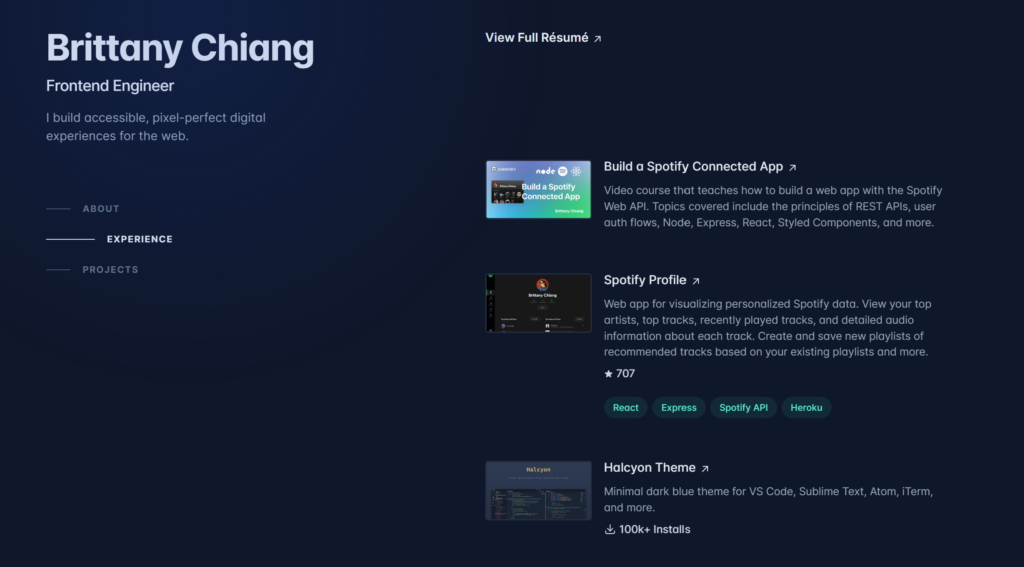
Brittany Chiang built one of the most referenced developer portfolios on the web, and for good reason. Her site at brittanychiang.com combines clean design with interactive elements that immediately demonstrate her frontend capabilities.
What makes it work? Brittany uses a single-page layout with smooth scrolling that shows off her attention to user experience. The portfolio features a sticky sidebar navigation, subtle hover effects, and a consistent color scheme with teal accents that creates visual cohesion throughout.
The projects section showcases her work at major companies including Apple Music, where she developed interactive web apps, and Klaviyo, where she currently works on the component library team. Each project includes context about the problem solved, technologies used, and links to GitHub repos where possible.
The result? Her portfolio helped her land positions at top-tier tech companies and has been featured as an example of excellence in developer portfolio design. Her GitHub repo for the portfolio has over 8,200 stars, showing how many developers have used it as inspiration.
Interview Guys Tip: When showcasing projects from past employers, focus on what you learned and the problems you solved rather than sharing proprietary code. This demonstrates professionalism while still highlighting your capabilities.
2. Yan Holtz: Data Visualization Specialist at Datadog
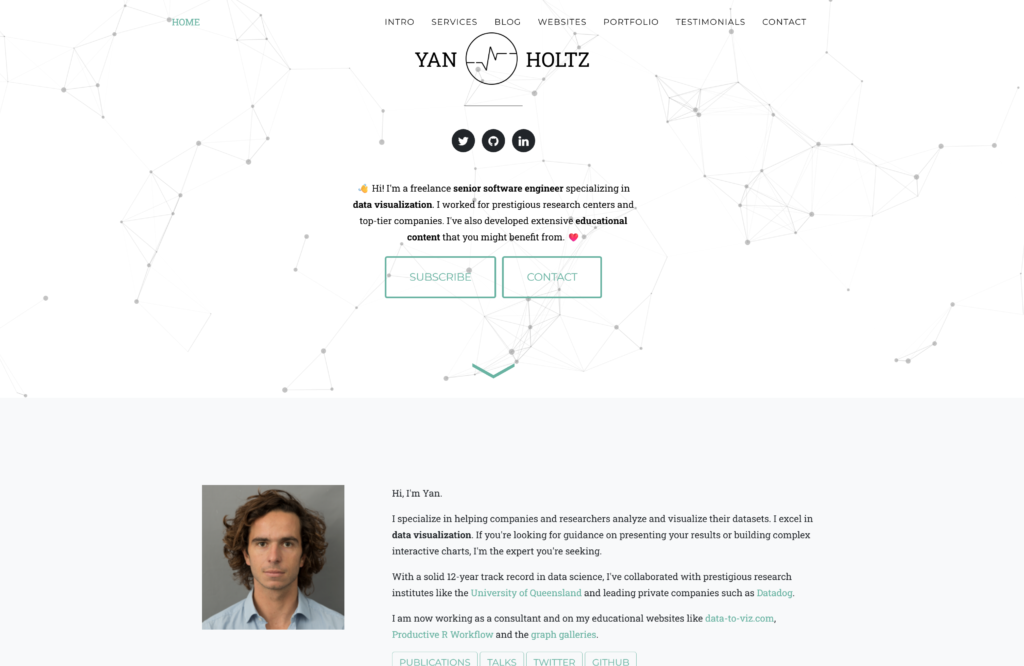
Yan Holtz works as a software engineer at Datadog, but his portfolio at yan-holtz.com showcases something many data analysts miss: the power of beautiful data visualization combined with technical skill.
His site features interactive designs that immediately demonstrate his technical capabilities while being visually stunning. The homepage features geometric shapes that respond to mouse movement, immediately showing both his coding abilities and his design sensibility.
What elevates Yan’s portfolio is his combination of educational content and professional work. He created and maintains educational websites including the R Graph Gallery, Python Graph Gallery, and Data-to-Viz, which collectively receive over 800,000 visits per month. This demonstrates not just technical skill but thought leadership in his field.
His portfolio includes detailed case studies of projects he’s worked on for prestigious research institutes like the University of Queensland and for companies like Datadog. Each project shows the problem, the technical approach, and the measurable impact.
For data professionals aiming for senior roles, Yan’s portfolio demonstrates a crucial lesson: technical skills alone aren’t enough at higher levels. The ability to communicate complex insights through clear visualizations becomes increasingly valuable as you move up the career ladder.
3. Abdus Salam (abdussalam.pk) – Meta FinTech Senior Product Designer
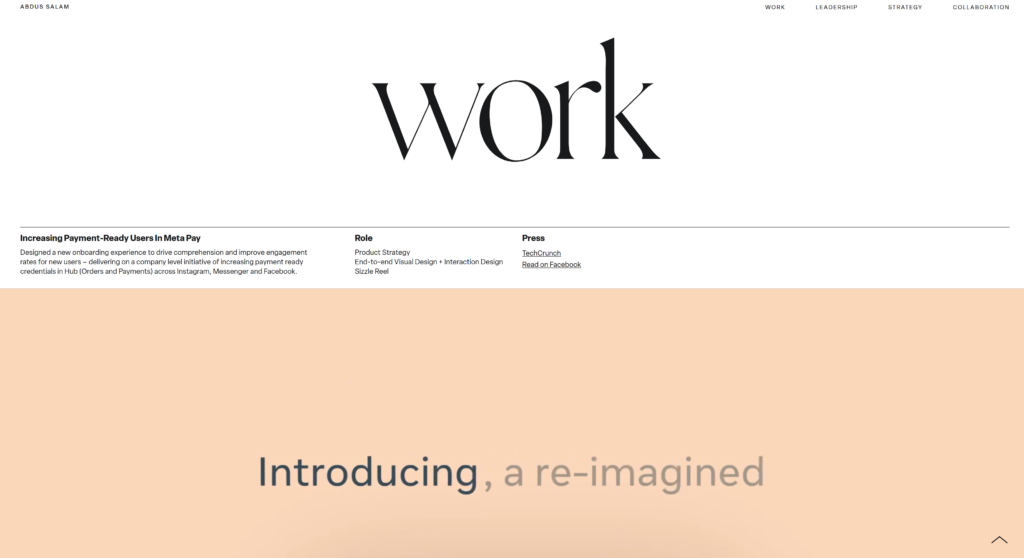
When Abdus landed his role at Meta as a Senior Product Designer for FinTech, his portfolio told a story that went beyond pretty mockups. His site showcases end-to-end case studies from his Ad Strategies work, where he led design for underserved advertisers (small and mid-sized businesses), plus his payment product designs across Facebook, Instagram, and Messenger.
What makes Abdus’s portfolio stand out? He doesn’t just show the final designs. He walks you through the strategic thinking, the cross-functional collaboration, and the business impact. His Ad Strategies project details reveal how he helped scale automated ads to 100,000 advertisers with 67%+ win rates. That’s the kind of results-focused storytelling that gets you past the resume screen and into the interview chair.
The lesson here? Your portfolio needs to prove you can think like a product owner while executing like a designer. Show the problem, your process, and the measurable outcome.es her ability to think beyond aesthetics and focus on solving real business problems through design. This approach directly aligns with what hiring managers at companies like Google, Brilliant.org (where she later worked), and other top tech companies look for when filling UX positions.
4. Sophie Westfall: UI/UX Designer Who Mastered Visual Branding
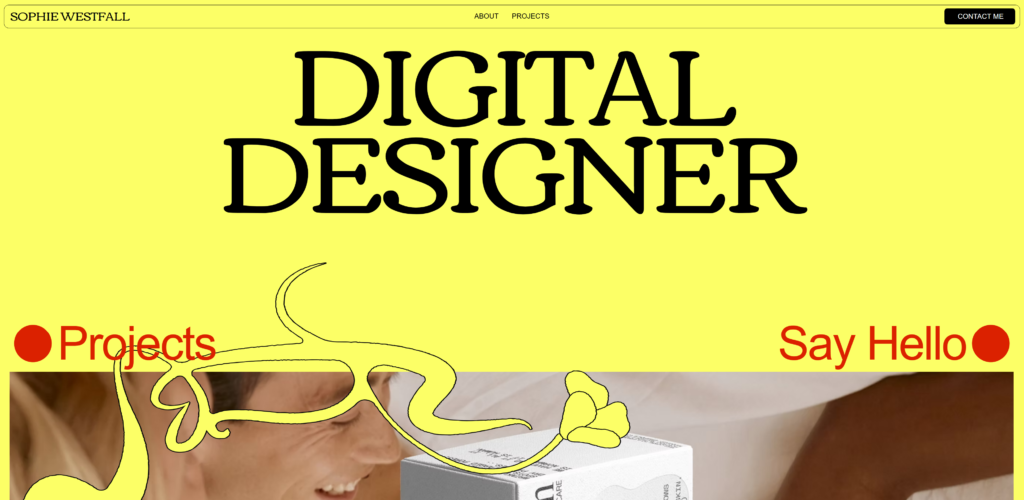
Sophie Westfall specializes in branding and UI/UX design, and her portfolio website at sophiewestfall.com itself serves as a demonstration of both skills. She created a well-defined visual language using bright yellow and black colors, geometric shapes, and strategic animations that make her work memorable.
Her portfolio excels at showing range without appearing scattered. The homepage immediately displays her tagline “Designing with empathy for the human experience” and features a grid of projects that maintain cohesive brand identity while demonstrating versatility in solving different client problems.
What makes Sophie’s portfolio effective for getting hired is her focus on client outcomes. The site includes case studies for major brands like Paula’s Choice, Walmart Creator, and other e-commerce platforms, each showing her systematic design process and the results achieved.
Interview Guys Tip: Numbers sell. Whenever possible, include specific metrics that show the impact of your work. Even estimates based on client feedback can strengthen your case significantly when building authentic relationships with potential employers.
5. Josh W. Comeau: Frontend Developer and Educator
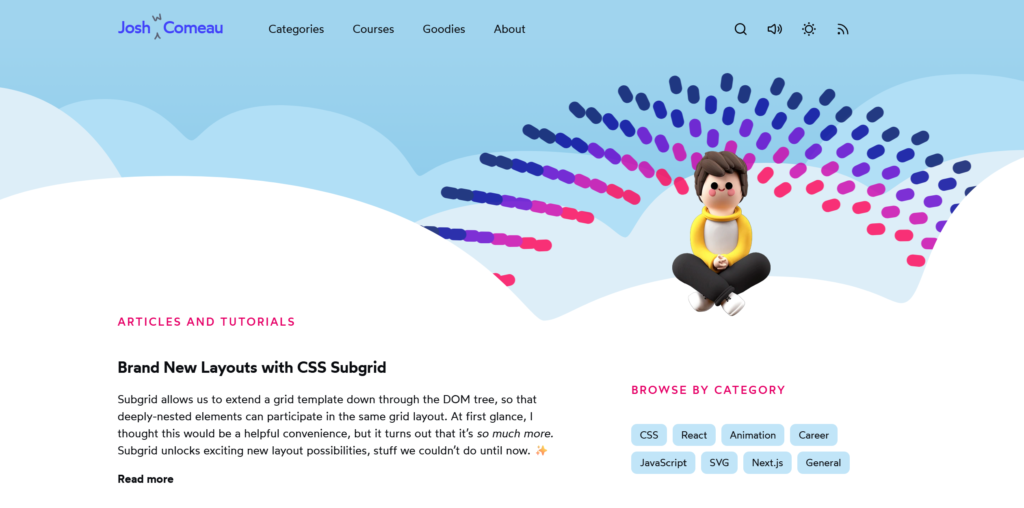
Josh W. Comeau built his portfolio at joshwcomeau.com to stand out in a crowded field of frontend developers. His site combines technical excellence with personality, featuring interactive tutorials, animations, and a blog that demonstrates deep understanding of frontend concepts.
What makes Josh’s portfolio unique is how he uses it to showcase both his development skills and his ability to teach complex concepts simply. His blog posts on CSS, React, and JavaScript fundamentals have become go-to resources in the developer community, establishing him as a thought leader.
The portfolio features projects with live demos, detailed write-ups of technical challenges overcome, and links to source code. But more importantly, it shows his approach to problem-solving and his commitment to helping other developers learn, which makes him attractive to companies looking for senior engineers who can mentor teams.
Interview Guys Tip: Feeling inspired by these examples? Explore Squarespace’s portfolio templates to find a professional design you can customize in minutes. No coding required.
6. Matt Farley: Designer Who Landed Clients Through Smart Positioning
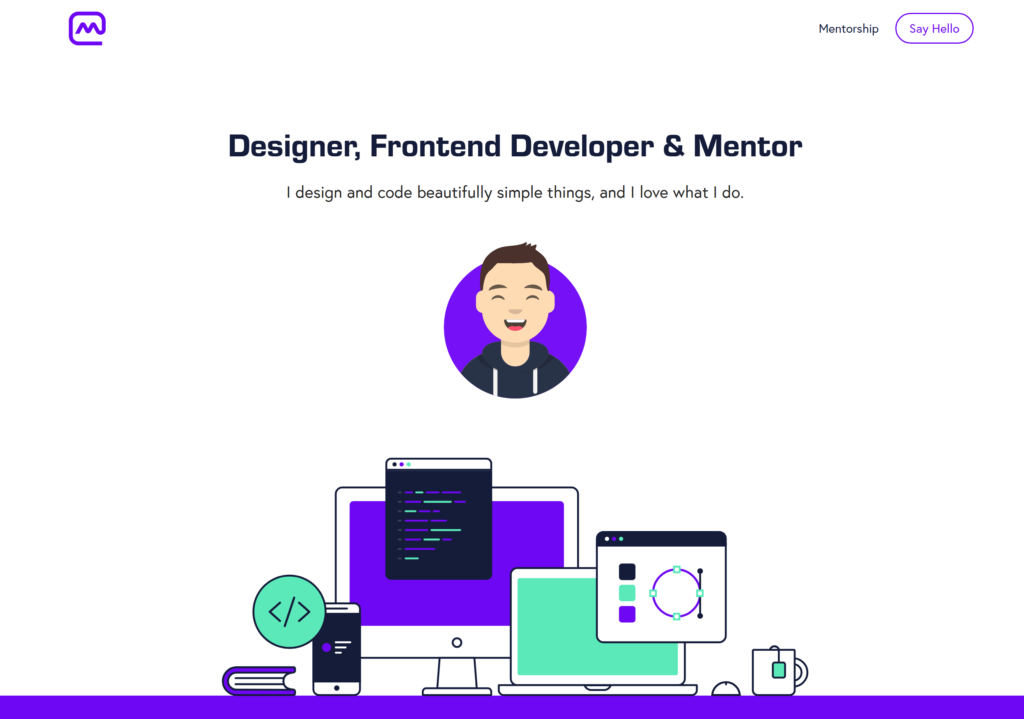
Matt Farley’s portfolio at mattfarley.ca takes a different approach from purely visual showcases. His homepage immediately communicates his value proposition: “Designer, Frontend Developer & Mentor” with a clear statement about helping companies bring their ideas to life.
What works about Matt’s portfolio is the strategic simplicity. Instead of overwhelming visitors with dozens of projects, he curates a selection that demonstrates range across different industries and problem types. Each project includes the challenge, his approach, and the outcome.
The site also includes testimonials from past clients and employers, which adds social proof that his work delivers results. For freelancers and contractors especially, this kind of personal branding helps convert portfolio visits into actual job offers.
7. Patrick Heng: Creative Developer with 3D Expertise
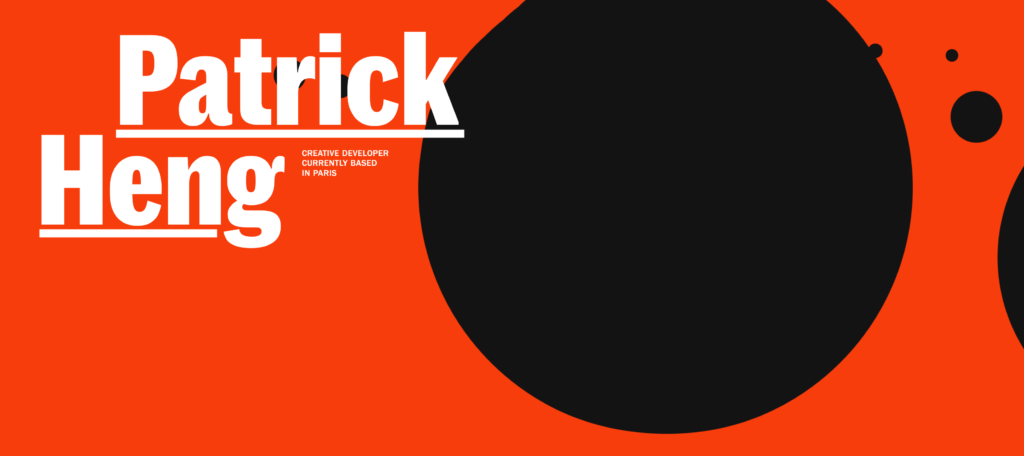
Patrick Heng’s portfolio at patrickheng.com immediately grabs attention with immersive 3D experiences built with Three.js and WebGL. As a creative developer, his site itself serves as the ultimate portfolio piece, demonstrating advanced frontend capabilities.
The portfolio features smooth animations, particle effects, and interactive 3D scenes that respond to user input. While this level of complexity isn’t necessary for every developer portfolio, it perfectly demonstrates Patrick’s specialty: creating engaging, cutting-edge web experiences.
What hiring managers can immediately see from Patrick’s portfolio is not just technical skill but creativity and attention to detail. The site loads quickly despite the heavy 3D content, showing optimization skills. The navigation is intuitive despite the unconventional design, showing UX awareness.
8. Adham Dannaway: Designer/Developer Hybrid Portfolio
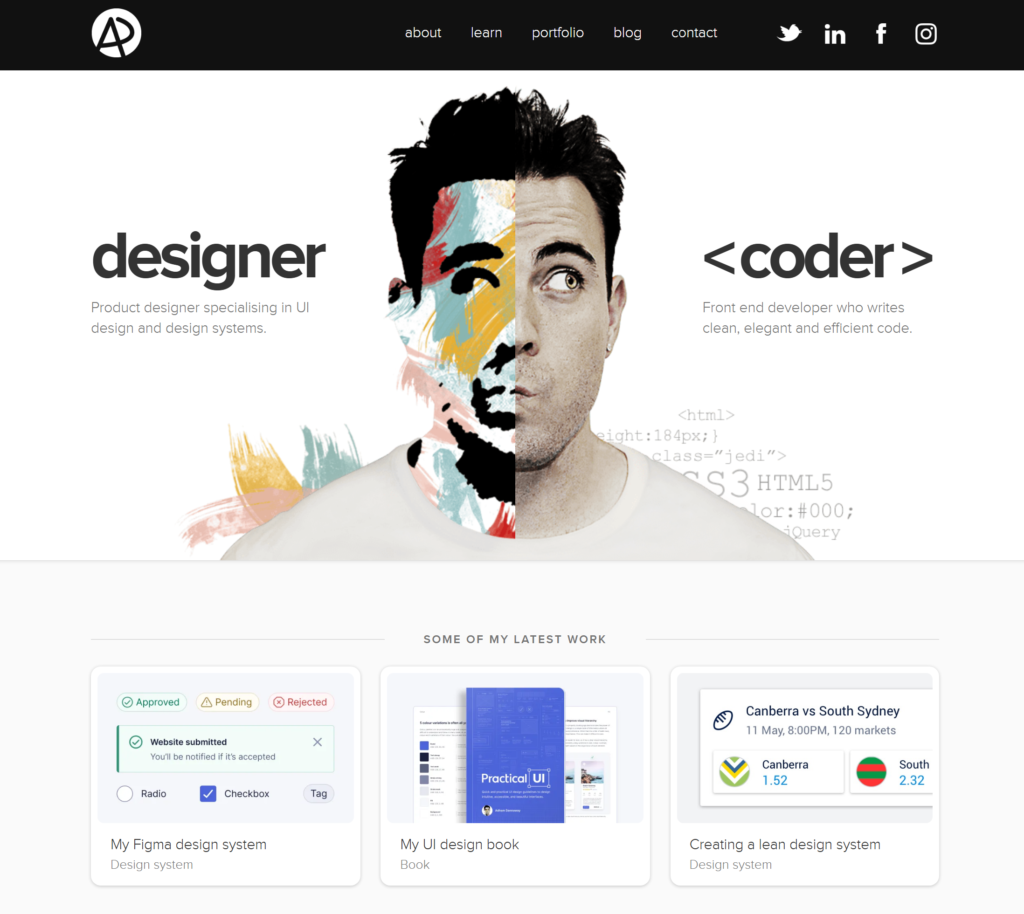
Adham Dannaway’s portfolio at adhamdannaway.com brilliantly demonstrates his dual skill set as both designer and developer. The homepage features an innovative split-screen concept that literally divides his design work from his development work.
This portfolio is particularly effective for professionals who work across disciplines. Instead of trying to fit everything into one narrative, Adham clearly shows he can handle both sides of the equation. The site includes detailed case studies, client testimonials, and a clear call to action for potential employers or clients.
What makes this portfolio work for landing jobs is how it addresses a common hiring manager question: “Can this person actually do both design and development well?” By literally splitting the screen and showing equal depth in both areas, Adham removes any doubt.
Interview Guys Tip: If you have multiple skill sets, don’t hide them to appear more specialized. Instead, find creative ways to showcase how your diverse abilities make you more valuable. Companies increasingly value professionals who can handle multiple aspects of a project.
9. Rob Bowen: Digital Designer Portfolio with Personality
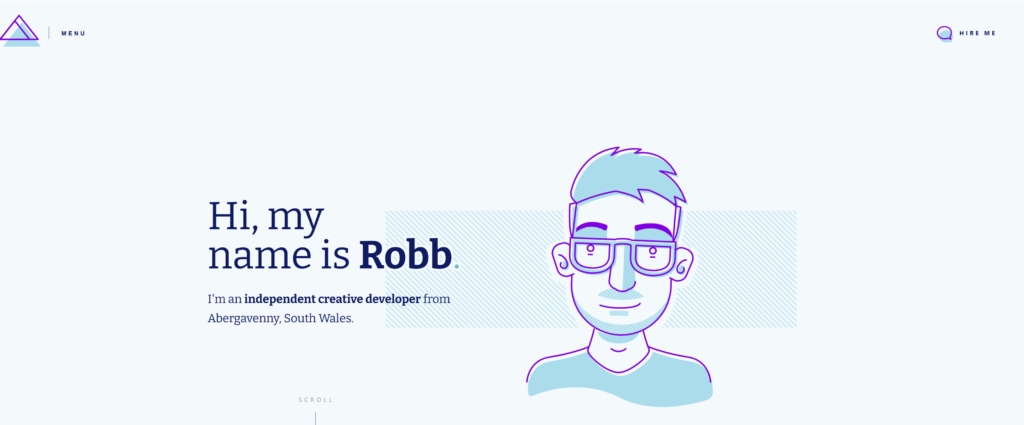
Rob Bowen’s portfolio at robbowen.digital demonstrates that personality matters in portfolio design. The site opens with playful copy and a distinctive visual style that immediately communicates Rob’s approach to design: creative, approachable, and user-focused.
The portfolio includes a mix of client work, personal projects, and side hustles, each explained with context about the goals and outcomes. What makes this particularly effective is how Rob uses storytelling to make each project memorable rather than just showing screenshots.
For creative professionals, Rob’s portfolio shows the value of being authentic rather than trying to fit a corporate mold. The conversational tone and personal touches make the portfolio memorable, which is exactly what you want when competing against hundreds of other applications.
10. Micah Lindley: Developer Portfolio with Clean Minimalism
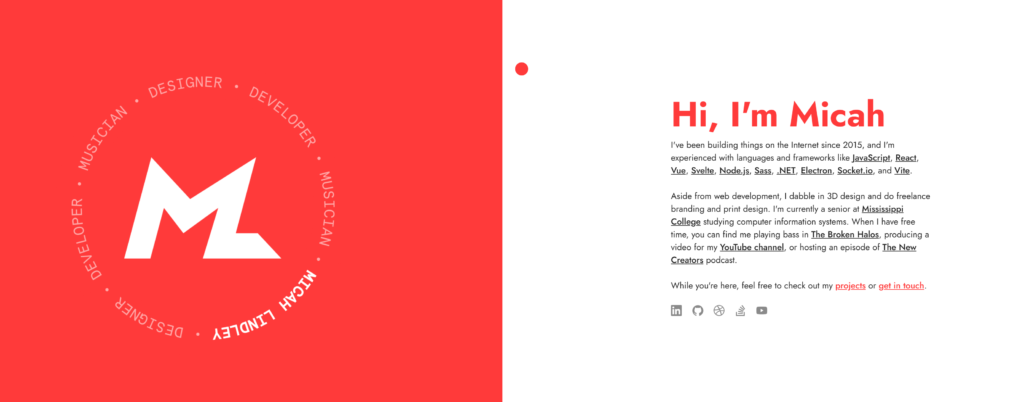
Micah Lindley’s portfolio at micahlindley.com proves you don’t need complexity to be effective. Built with Nuxt.js and featuring clean typography and subtle animations, the site demonstrates that sometimes restraint is more impressive than excess.
The portfolio focuses on clarity: a brief introduction, carefully selected projects with clear descriptions, and easy ways to get in touch. Each project includes the problem solved, technologies used, and links to live demos or repositories.
What works about Micah’s approach is how it lets the quality of the work speak for itself. The clean design doesn’t distract from the projects themselves, and the fast loading time ensures hiring managers actually stay on the site long enough to review the work.
Inspired by these real-world success stories? Start building your own portfolio with professional templates that are proven to convert visitors into job offers.
What These Portfolios Have in Common
After analyzing these ten examples, several patterns emerge that you can apply to your own portfolio:
- Clear value proposition. Each portfolio immediately communicates what the person does and who they help. You shouldn’t have to scroll or click around to understand the person’s specialty.
- Curated, not comprehensive. None of these portfolios try to show every project ever completed. They select 3-7 strong examples that demonstrate different skills and approaches.
- Context over screenshots. The most effective portfolios explain the why behind each project: what problem was being solved, what constraints existed, and what the outcome was.
- Mobile-responsive design. With 66% of web traffic coming from mobile devices, every one of these portfolios works flawlessly on phones and tablets.
- Fast loading times. Despite impressive visuals and interactivity, these sites prioritize performance. Hiring managers won’t wait for slow sites to load.
- Personality without gimmicks. Each portfolio has a distinctive voice and style, but never at the expense of usability or professionalism.
The good news? You don’t need to be a designer or developer to create a portfolio that looks this professional. Modern website builders like Squarespace offer templates specifically designed for portfolios, giving you a head start with proven layouts that work.
Interview Guys Tip: Check out our complete guide on building your own portfolio website if you want detailed guidance!
How to Build Your Own Effective Portfolio
Based on these examples, here’s your action plan for creating a portfolio that gets you hired:
- Start with strategy, not design. Before you touch any code or design tools, identify your target audience (what companies or roles) and what they need to see to feel confident hiring you.
- Choose 3-5 of your absolute best projects. Quality beats quantity every time. Each project should demonstrate different skills or approaches. If you don’t have professional work yet, create passion projects that solve real problems.
- Tell the story behind each project. Explain the context, the challenge, your approach, and the outcome. Use specific metrics where possible (improved load time by X%, increased conversion by Y%).
- Make it dead simple to contact you. Include your email prominently, link to your GitHub/LinkedIn, and consider adding a contact form for additional convenience.
- Optimize for speed and mobile. Test your portfolio on actual phones and use tools like Google PageSpeed Insights to ensure fast loading. A slow or broken mobile experience will kill your chances.
- Keep it updated. Set a calendar reminder to review and update your portfolio quarterly. Remove outdated projects, add new work, and refine your copy based on the roles you’re targeting.
Common Portfolio Mistakes to Avoid
Don’t make these errors that immediately turn off hiring managers:
- Showing too many projects. Fifteen mediocre projects dilute three excellent ones. Be ruthlessly selective about what you include.
- Forgetting to explain your role. If you worked on a team, clearly state what YOU specifically did on the project. Taking credit for team work is obvious and damages credibility.
- Using only tutorial projects. Hiring managers can spot a “todo app from a YouTube tutorial” instantly. Either add unique features or build something original.
- Making it hard to see your work. Don’t hide everything behind “view project” buttons that go to broken links or require downloads. Show screenshots or better yet, live demos directly on your portfolio.
- Neglecting the copy. Your writing quality matters. Typos, grammatical errors, and unclear explanations suggest carelessness that will extend to your work.
Resources for Building Your Portfolio
You don’t need to code everything from scratch. Here are legitimate starting points:
Our own guide on building a portfolio website can be found here.
Our Number 1 recommendation based on ease of use and quality:
Squarespace offers beautiful, professionally designed portfolio templates that you can customize without writing a single line of code. Their drag-and-drop editor gives you full design control while handling all the technical details like hosting, security, and mobile responsiveness. Perfect for creatives and professionals who want to focus on showcasing their work rather than wrestling with code.
Other good options (But have higher learning curves)
Webflow allows you to build professional portfolios with more design flexibility if you’re comfortable with visual development tools.
Format specializes in portfolios for creative professionals with beautiful templates specifically for photographers, designers, and artists.
GitHub Pages offers free hosting for portfolios built with HTML/CSS/JavaScript, perfect for developers who want full control.
WordPress with a portfolio theme gives you flexibility and extensive customization options if you’re comfortable with that ecosystem.
The platform matters less than the content. Focus your energy on curating exceptional work examples and telling compelling stories about your problem-solving approach.
Conclusion
Your portfolio website isn’t just a digital resume. It’s proof that you can deliver results, a demonstration of your taste and judgment, and often your first real impression on hiring managers at companies you want to work for.
The professionals featured in this article didn’t land jobs at Apple, Google, Datadog, and other top companies by accident. They strategically built portfolios that communicated their value clearly, demonstrated their skills tangibly, and made it easy for hiring managers to imagine them succeeding in the role.
You can do the same. Start by studying these examples, identify what resonates with your target audience, and build a portfolio that showcases not just what you’ve done, but what you’re capable of doing next.
The best time to build your portfolio was last year. The second best time is today. Browse portfolio templates to get started, and remember that done is better than perfect. You can always refine and improve as you go, but you can’t get hired from a portfolio that doesn’t exist yet.
In our experience helping over 100 million job seekers, the candidate with a professional website consistently stands out over equally qualified applicants who only submit a resume. That website is your unfair advantage…
200 Applicants Have Resumes. Only You Have a Website…
We recommend Squarespace because it gives you a professional online presence that makes you memorable. Choose from designer templates, customize without coding, and create a portfolio that actually gets you interviews. Free 14-day trial, and you can launch your site before other candidates finish tweaking their resume.
This is the general advice. Longbow applies it to your actual search: real match scores, ghost-job checks, and prep for the jobs worth your time. Here's the full story.

ABOUT THE INTERVIEW GUYS (JEFF GILLIS & MIKE SIMPSON)
Mike Simpson: Co-founder of The Interview Guys and Longbow. He has been the voice behind our interview advice since 2013 — his work has reached over 100 million job seekers around the world. The strategic mind behind Longbow, our new career platform.
Jeff Gillis: Co-founder of The Interview Guys and Longbow. He built the systems that put our work in front of those readers, and he leads the engineering on Longbow, the cutting edge career platform built for today’s job seeker.